
Cesare Mattei, a Forerunner of Systems Medicine
From Electrohomeopathy to neuroscience, and the role of the sacred mountain of Montovolo
Essay by Francesca Ollin Vannini with the contribution of Graziano Baccolini's studies - Compiled and edited by Luigi Vannini with the support of Artificial Intelligence - July 2026
1. Introduction: a heretical physician between science and mystery
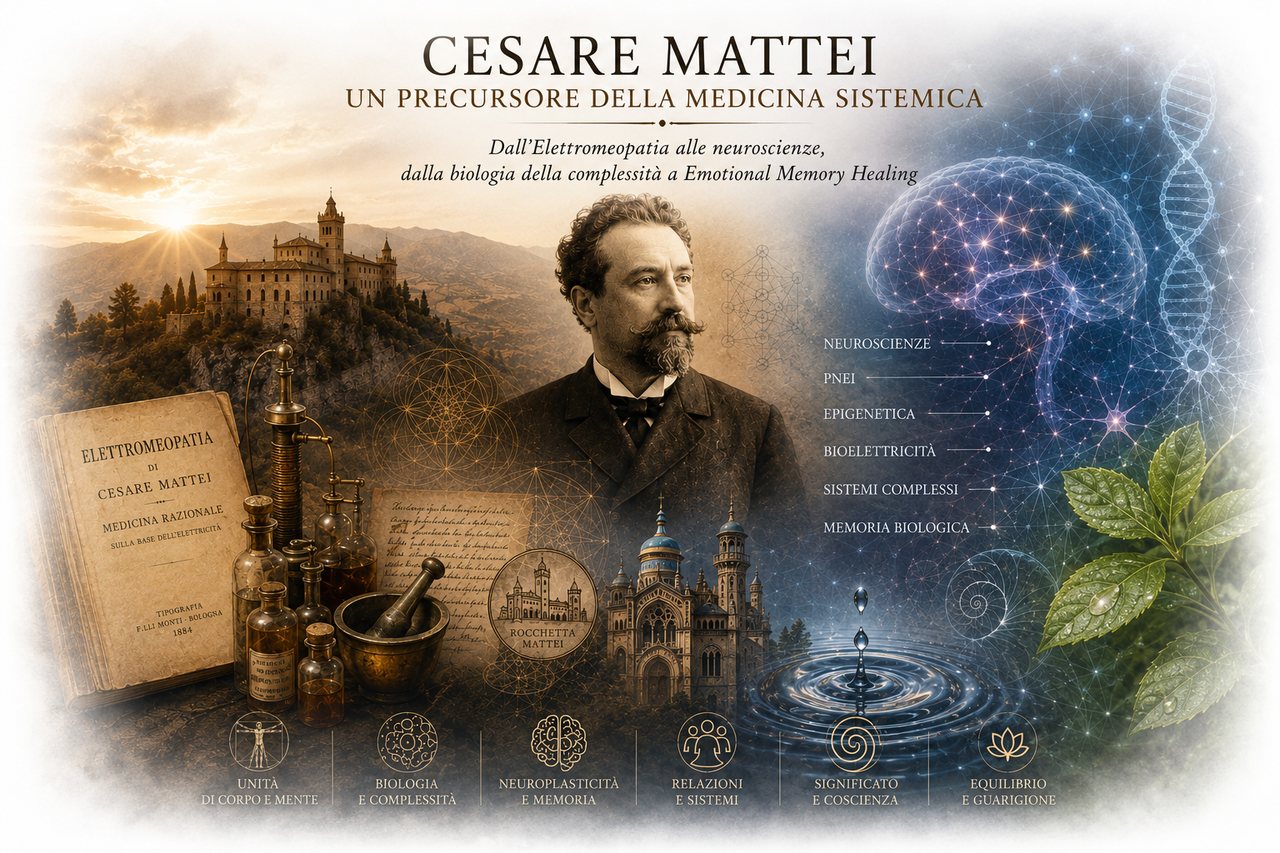
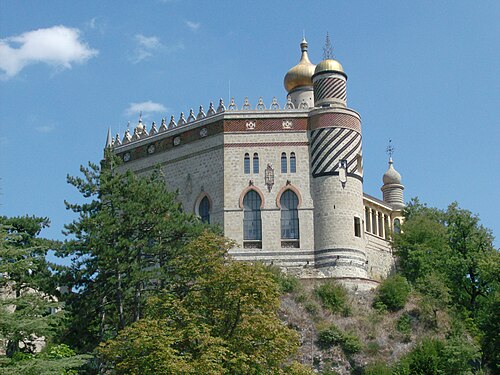
Among the most original figures in nineteenth-century medicine, Count Cesare Mattei (1809–1896) occupies an entirely singular place. A self-taught physician, researcher, philosopher of nature and the inventor of Electrohomeopathy, he devoted most of his life to the search for a medicine capable of acting not merely on symptoms, but on the deep causes of disease.
His work unfolded in a period of profound transformation. On one side, positivist medicine was laying the foundations of modern physiology and bacteriology; on the other, there survived vitalist, homeopathic, magnetic and hermetic traditions that regarded health as the expression of a balance of invisible forces. Electrohomeopathy was born precisely at this crossroads.
The bare facts are already remarkable. From 1881 onwards, Mattei launched from his Apennine residence — the Rocchetta Mattei, at Riola di Vergato — a production that within a few years reached every continent; thousands of patients testified to cures where official medicine had given up; and on his death in 1896 the remedies continued to be manufactured to the same formulas, but no longer with the results obtained in the Count's own lifetime.
To understand Cesare Mattei therefore means understanding not only a man, but an entire vision of nature, disease and healing. This essay reconstructs it along three distinct lines of reading, which are best declared at the outset because they have different epistemic standing.
The first is historical-biographical and systemic, and it is the framework of Francesca Vannini's monograph (2026): rather than asking whether the remedies worked, it asks what model of the organism Mattei was proposing, and puts that model into dialogue — with explicit methodological caution — with bioelectricity, epigenetics, psychoneuroendocrinoimmunology and systems biology.
The second is symbolic-initiatory, and it is the reading offered by the engineer Alessandro Rapparini: the Rocchetta as a text, as an architecture conceived as a language rather than as a mere residence.
The third is energetic-geographical, and it is the thesis of Professor Graziano Baccolini of the University of Bologna: the true therapeutic agent would not have been the herbal formula, but a subtle energy that the Count knew how to capture and infuse into his preparations — an energy coming from the sacred mountain of Montovolo, visible from the tower of his laboratory.
2. Family origins and the wound that became a vocation
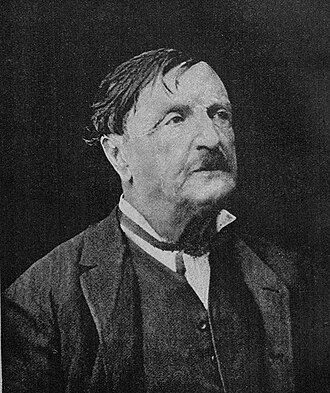
Cesare Mattei was born in Bologna on 11 January 1809 to Luigi Mattei and Teresa Montignani.
On this point Rapparini corrects a widespread misunderstanding: the Bolognese Mattei family did not belong to the ancient Roman aristocracy of the same name, but was an extremely wealthy family that had built its fortune from peasant origins. His grandfather Andrea and then his father Luigi amassed a considerable estate through trade and property investment during the Napoleonic period. The comital title would arrive much later, and by another route.
The sudden death of his father in 1827, when Cesare was barely eighteen, marked his youth deeply. Despite the loss he received a very broad education: he studied the classics under the guidance of the man of letters Paolo Costa — philosophy, literature, mathematics, astronomy — travelled widely in Italy and Europe, and frequented the liveliest cultural circles of his day. It is the profile of a wide-ranging intellect, of a man accustomed to reading across disciplines, and it would form the ground on which his medical research grew.
The event that radically transformed his life, however, was another. In 1830 his mother Teresa Montignani was struck by breast cancer and endured fifteen years of painful progression of the disease. Mattei looked on, powerless, at the treatments of official medicine — in an age when not even effective sedatives existed, and the only accepted therapies were leeches and cold douches — growing ever more convinced that it was incapable of grasping the true causes of suffering. Teresa died in 1845.
Rapparini identifies precisely in this experience the founding moment of Electrohomeopathy: not a generic interest in medicine, but the beginning of a personal quest driven by the desire to identify wholly new therapeutic principles. It was that pain, transformed — as Mattei himself wrote in enigmatic Latin inscriptions placed in the Rocchetta — into a mission for the benefit of all humanity, that generated his system.
2.1 A biogenealogical reading
The structure of this story is recognisable. In Biogenealogia. Le Radici dell'Anima (OM Edizioni, 2025), Francesca Ollin Vannini studies how an unprocessed primary wound turns into an existential mandate — what biogenealogy calls the "ancestor syndrome": the wound that found no solution becomes a programme. Mattei's story is a textbook case: fifteen years spent beside the impotence of physicians, and out of that a therapeutic system that sets out to cure cancer itself.
In the astrological archetype of Chiron — which Ollin Vannini explores in the book of the same name (Chirone: la chiave dello Spirito, 2021) — the Wounded Healer heals others precisely because he has passed through his own wound without being able to heal himself. Mattei could not save his mother; he founded a system that, according to the testimonies, would help thousands of others.
On the biographical level this remains an interpretative model, not a causal explanation. It has the merit, however, of accounting for an element otherwise overlooked: the almost obsessive intensity with which Mattei pursued his research for more than fifty years, never surrendering control of it to anyone.
3. His formation: Galvani, Hahnemann and the underlying question
For Mattei the problem was not to find a drug more effective than those already available. The question that began to guide his entire research was far more ambitious: what was the common principle underlying all diseases, and why did the medicine of his time seem confined to countering their effects without understanding their origin.
From that moment he undertook a systematic study of medicine, botany, physiology, anatomy, the homeopathy of Samuel Hahnemann and the principal therapeutic traditions known in the first half of the nineteenth century. In parallel he went deeply into the research on animal electricity developed by Luigi Galvani, his illustrious fellow citizen, which had opened a new perspective on the relationship between energy and the living organism. In his writings the debt is openly declared:
"Galvani too, my fellow citizen, had the whim of investigating the electric fluid bound up in the nerves and muscles of animals; and he claimed to have found that quid which sets things in motion… We likewise have sought the vegetable electric fluid; and if Galvani's awakens the appearances of life in a dead frog, ours restores the vitality and the impaired health in the muscles and nerves of a man bound for certain death."
It is a revealing passage. Mattei conceives electricity not merely as a physical phenomenon, but as a manifestation of the vital force present in organisms. If Galvani had identified an electrical principle in the animal kingdom, he held it possible that the vegetable kingdom too might harbour a particular form of energy capable of restoring the balance of the human organism.
The aim of his research was therefore not to devise a new pharmacology, but to understand the fundamental laws of life and disease. He was not simply looking for new remedies: he was looking for a new law of healing.
In the years that followed, this quest turned into a long labour of observation, experiment and study of the properties of medicinal plants, out of which the therapeutic system Mattei called Electromyopathy would gradually be born.
4. From homeopathy to a new therapeutic paradigm
After years of observation and experiment, Mattei came to the conviction that most diseases should not be interpreted as a problem of a single organ, but as the consequence of deeper alterations of the blood, of the lymphatic system and of the vitality of the organism. From this intuition was born a system that he initially called Electromyopathy, a term that in later editions became Electrohomeopathy. The subtitle he himself gave it sums up the whole design:
"Electromyopathy of Count Cesare Mattei — A New Science that cures the blood and heals the organism."
Not a collection of remedies, then, but a new conception of disease and healing.
Mattei always acknowledged his debt to Hahnemann:
"Electromyopathy is nothing but the completion of Hahnemann's great discovery, brought about by joining vegetable Electricity to the principle of likes."
And again, in a formula he repeated all his life: "Thus homeopathy cures the symptoms, electromyopathy cures the causes." It must be said at once that this is a claim made by its author, not a demonstrated conclusion: it expresses a therapeutic conception, not an experimental result.
Rapparini observes, however, that when the system is analysed concretely, the principle similia similibus curentur does not appear to constitute its real operating foundation. While theoretically invoking homeopathy, Mattei builds a profoundly different medicine — to the point where the two systems appear, in clinical practice, almost foreign to one another.
In practice the differences were sharp: Electrohomeopathy used dilutions never exceeding three successive degrees and compound formulations (not simples), with ingredients kept confidential. Production followed, according to an 1892 manual, "the medieval doctrine of the spagyrists" — alchemy applied to plants.
5. Vegetable Electricity and the secret of the compounds
The most original element of the whole system is the concept of Vegetable Electricity. Homeopathy uses dynamised medicines; Mattei instead introduces a different principle: the efficacy of the remedy would depend not only on the plant employed, but above all on a particular electrical property acquired during the process of preparation.
On this point Mattei shows remarkable intellectual honesty, admitting that he was unable to explain fully the phenomenon he was observing:
"I myself, who found it, know nothing about it. I know that I have analysed, and found nothing but a little magnesia; and I said: this is vegetable. I noticed that this vegetable has a prompt and sometimes instantaneous action, and I said: this action is electric; this is Electricity. I have seen this Electricity heal ills reputed incurable, and I said: this is Medicine."
It is a procedure in which the phenomenon precedes the theory — an attitude that Francesca Vannini describes as effectively phenomenological, even though the vocabulary of phenomenology would only be born with Husserl half a century later. And here lies the core of the famous secret:
"We assert that our discovery lies in great part in the secret of giving the medicines electrical properties."
All his life Mattei was accused of guarding a secret. He replied more than once that the vegetable origin of the remedies was not hidden at all: what remained confidential was exclusively the procedure by which they acquired those properties.
That method has never been reconstructed with certainty. The hypotheses put forward range from spagyric procedures to electrolysis, from the magnetisation of the preparations to other polarisation techniques. It is the point around which all later interpretations revolve — including Baccolini's energetic one, discussed in Part IV.
6. The remedies: granules, electric fluids, external preparations
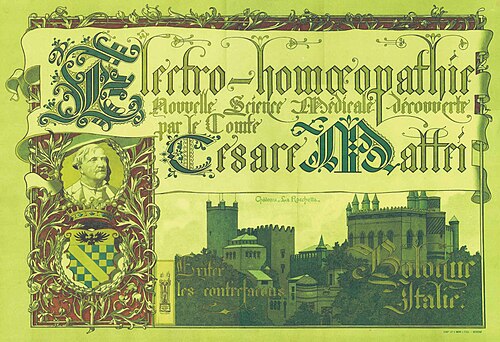
The guiding theory was that the state of health depended on the balance between positive and negative electrical charges distributed across the different segments of the body, particularly in the blood and the lymphatic system. Disease was imbalance; therapy, the restoration of electrical neutrality.
The system was organised into two main categories.
Granules, in eight categories: anti-scrofulous, anti-cancerous, anti-angiotic, febrifuge, pectoral, anti-lymphatic, vermifuge, anti-venereal. They took the form of small, slowly dissolving white pills, different from standard homeopathic globules.
Electric fluids, in five colours — red, blue, white, yellow, green — also classified by polarity, from double positive to double negative. They were the most controversial component of the system.
The system was completed by external preparations: baths, compresses, ointments and salves.
7. Worldwide diffusion, fame and hostility
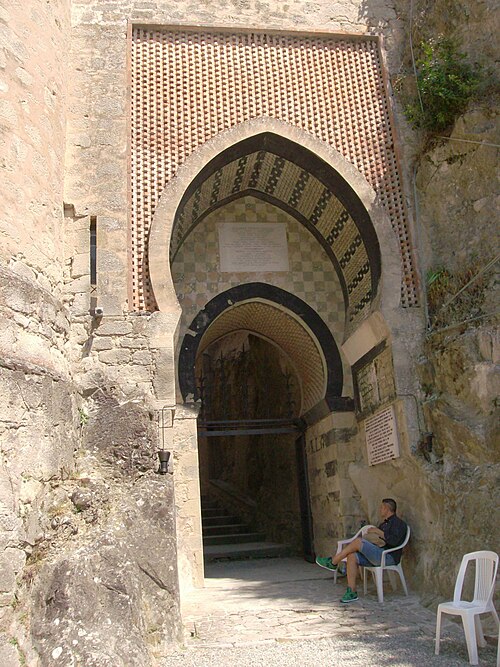
From 1881 Mattei began the industrial production of the remedies, giving rise to a distribution network of surprising proportions. By 1884 the authorised depots already numbered 107, spread across Europe (France, Germany, Switzerland, England, Poland, Russia, Spain, Holland), the Americas (USA, Haiti, Argentina), Asia (the East Indies/Mangalore, Japan/Yokohama) and China. Under his successor Mario Venturoli — adopted by Mattei in 1888 after saving the family estate from a serious financial crisis — the depots rose to 266 by 1914. A report of 1891 estimated that some one million bottles of granules were dispatched each year, along with a comparable number of bottles of fluids and boxes of ointment.
Between 1870 and 1930 Electrohomeopathy was the most widespread alternative medicine in the world.
Its international fame found confirmation in literature as well. Fyodor Dostoevsky slipped an allusion to the Count into The Brothers Karamazov (1880): the devil, in Ivan's nightmare, tells of having written "to Count Mattei in Milan" to obtain "a book and some drops" for his ailments. The detail is precious — Dostoevsky would not have cited Mattei had he not been universally known to the Russian public. Equally significant is the visit of Lady Isabel Burton, wife of the explorer Richard Francis Burton, in May 1883, who documented the castle and its consultations in minute detail.
The journalist W.T. Stead published in January 1891, in The Review of Reviews, the report "Can Cancer be Cured? A Visit to Count Mattei", unleashing a wave of British interest — and the consequent offensive of official medicine. As early as 1888 E.W. Berridge had labelled the phenomenon "Matteism: The Latest Craze"; in 1892 G.W. Potter dismissed it in the British Medical Journal with "Matteism: An Exposure"; in 1899 The Homoeopathic Recorder branded it "The Mattei Humbuggery".
8. The end of the empire and its survival in Asia
On Mattei's death in 1896 some 2,000 people gathered for the funeral procession and 6,000 for the religious commemoration of 14 April. Management of the Rocchetta and of the laboratories passed to Mario Venturoli, who had meanwhile married the Romanian Sofia Condescu — a circumstance that gave rise to accusations that the Count had been poisoned, later dropped. Under his direction the business continued to grow until 1914, but therapeutic results declined progressively. By the 1930s Mattei's ideas were "generally set aside" in Europe; the Bologna laboratory closed on 3 December 1969.
Why the efficacy was lost is the question that runs through this essay from beginning to end. Baccolini's answer — the unintentional destruction of the device that charged the remedies — is set out in § 18; but it must be said that a far more prosaic explanation remains on the table, namely that the extraordinary efficacy was largely bound up with the figure of the Count, with his personal authority and with the expectation he was able to generate.
The paradox of India and Pakistan is, in any case, eloquent. Where official European science had dismissed the phenomenon as imposture, two great Asian nations not only continue to produce remedies "inspired by Mattei", but have built university institutions and systems of legal recognition around his legacy. Pakistan has formally recognised Electrohomeopathy as an official medical system; India has more than 500 dedicated institutes and offers university degrees in the discipline. The reason is probably twofold: on one hand the centuries-long experience of Ayurvedic medicine and of energetic systems (prana, chakras) makes those cultures more open to the notion of vital energy in remedies; on the other, the underlying herbal preparations have a real biological value, independently of any energetic charge.
9. The choice of site: nature as a laboratory of life
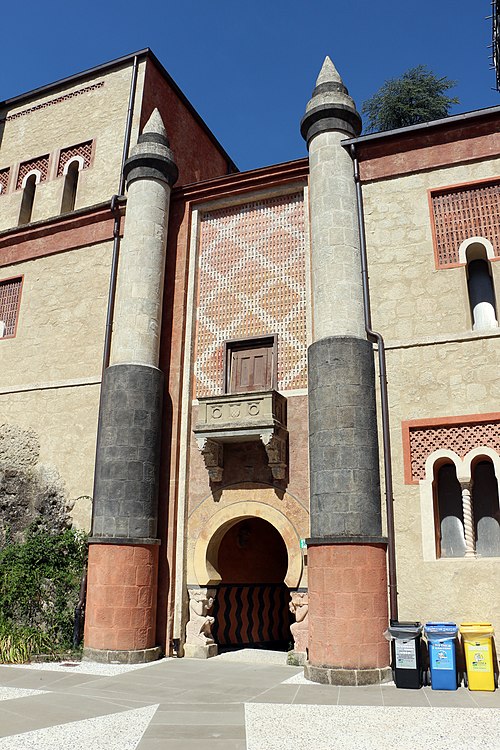
In 1850 Mattei bought the ruins of the medieval Rocca di Savignano, in the Reno valley near Riola, and began building the Rocchetta there. From 1859 he lived there permanently. The building was not merely his residence: it was a pharmaceutical laboratory, a therapeutic centre, a place of experiment and the operational heart of Electrohomeopathy, where patients from all over Europe were received.
Rapparini stresses that Mattei personally followed every phase of design and enlargement, intervening directly in architectural and decorative choices — a sign that nothing was left to chance.
From a practical point of view, the commanding position over the Reno valley provided spring water, fertile land and an extraordinary botanical richness, indispensable for cultivating medicinal species. The Rocchetta was in fact surrounded by gardens, greenhouses and plots given over to officinal plants, while inside it worked the laboratories where they were transformed by presses, mortars, churns and stills.
Alongside the practical motives, however, a possible symbolic reading emerges. Since antiquity the mountain has represented the place of spiritual elevation, the point of contact between earth and sky, the privileged space in which the transformation of the human being takes place. To build one's laboratory on the heights is to make the place where matter is transformed coincide with the place where the human being is transformed.
On the stylistic inspiration one fact is documented: the visit to the Crystal Palace in London in 1854, which left recognisable traces in the layout of the building.
10. A building constructed as symbolic language
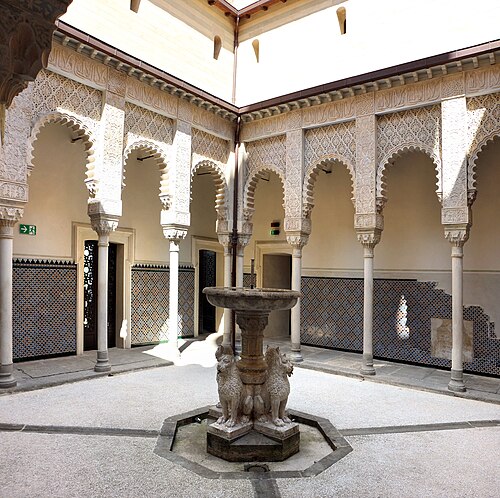
The Rocchetta still astonishes today by the variety of its architectural references: medieval elements coexist with Moorish architecture, oriental decoration, Gothic, Byzantine and Renaissance echoes. An apparently eclectic building, which nevertheless reveals a remarkable internal coherence. Mattei did not merely collect decorative elements belonging to different cultures: he integrated them into a unified design in which every space seems to possess a precise meaning.
The Rocchetta can thus be read as a work in which architecture takes on the role of language. Halls, towers, courtyards, stairs and passages appear not merely functional, but seem to accompany the visitor along a progressive itinerary recalling the initiatory concept of the path of transformation.
10.1 Jerusalem and the Temple of Solomon
Among the many references, one of the most significant concerns the evocation of the ideal Jerusalem and of the tradition of the Temple of Solomon, an imaginative world widely diffused in the hermetic and Rosicrucian culture of the nineteenth century. In the Western tradition the Temple does not represent merely a historical building: it is the symbol of cosmic order, of the harmony between heaven and earth, of the human being rebuilt in his integrity. The Heavenly Jerusalem described in the Book of Revelation becomes in turn an image of the reconciliation of matter and spirit.
There are no explicit statements by Mattei identifying the Rocchetta with the Temple. The presence of architectural allusions, ritual routes, concentric courtyards, transitional spaces and places of elevation has nevertheless led many scholars to interpret the building as a symbolic representation of this initiatory model.
The perspective is interesting when set alongside the medicine: as the Temple represents the rebuilding of the original order, so Electrohomeopathy proposes to restore the lost order of the organism through the rebalancing of blood, lymph and vital force.
10.2 Polarity
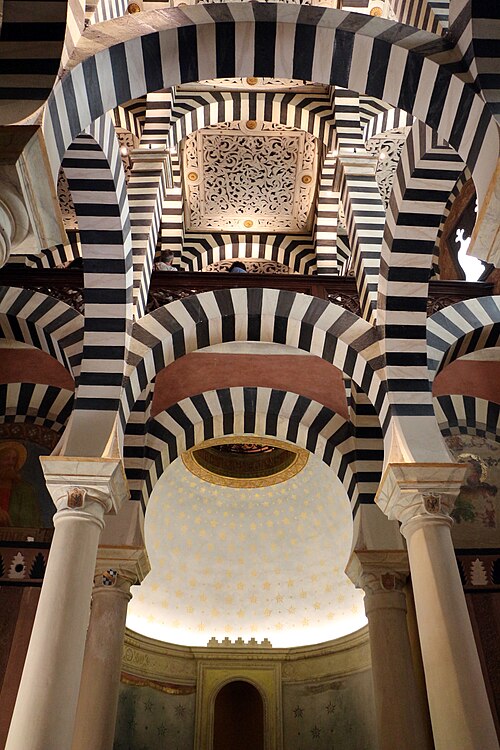
A recurring element in the Rocchetta is the continual dialogue between opposites: light and shade, white and black, inside and outside, high and low. These contrasts do not answer to aesthetic requirements alone: they recall one of the fundamental principles of hermetic philosophy, polarity.
The same concept returns, in a different form, in Mattei's medicine. His preparations are distinguished by positive and negative polarity, while Vegetable Electricity is described as a force capable of restoring the organism's balance. There is thus a coherence between the symbolic language of the architecture and the therapeutic language of his medicine: both founded on the idea that health derives from the harmonisation of complementary forces.
10.3 Microcosm, macrocosm and alchemical laboratory
Hermetic culture regards the human being as a microcosm, a reflection of the order of the macrocosm. Astronomical allusions, recurring geometries, the orientation of spaces and planetary symbolism suggest a possible adherence to this conception, already widespread in the Neoplatonic tradition, in Renaissance alchemy and in Rosicrucian philosophy. Mattei develops no astrological system in his treatises, but he builds a medicine in which the organism appears governed by universal laws of balance: the appeal to the heavens should be read as a representation of natural order, not as astrological practice in the modern sense.
The organisation of the spaces — laboratories, greenhouses, cultivations, rooms devoted to processing plants, presses, mortars, stills — recalls in many respects the model of the traditional alchemical laboratory, where scientific observation and the transformation of matter proceed together. In the alchemical tradition, however, the transformation of matter also represents the transformation of the human being: the athanor, the alchemical furnace, is the symbol of the inner process of purification. From this perspective the Rocchetta becomes a great laboratory of transformation, in which the preparation of the remedies and the patient's own path belong to the same process of regeneration.
To this is added a reference to the Rosicrucian tradition, which holds the human being to be the bearer of an inner light that may be obscured but not destroyed, and healing to be the progressive awakening of this vital force through the harmonisation of body, mind and spirit. Mattei, though adopting an apparently scientific vocabulary, describes a very similar principle when he attributes to Vegetable Electricity the capacity to restore the vitality of the organism. The lexicon changes; what remains central is the idea that health depends on the reactivation of a fundamental force.
11. The Tower of Vision: the secret laboratory
It is at this point that the symbolic inquiry meets the energetic one, and with it the most debated candidate for explaining the "secret" of § 5.
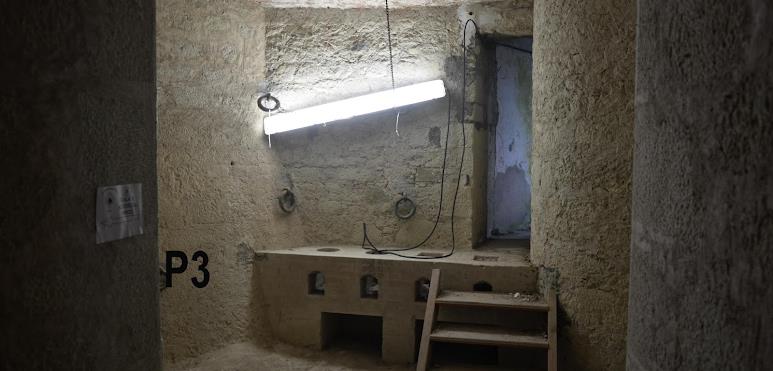
The crucial architectural element of the Rocchetta is the Tower of Vision. In the oldest photographs, taken by Pietro Poppi in 1883, the laboratory on the top floor shows unmistakable features: a room without any window whatsoever — today deeply altered and known as the "English Room" — and on the roof four large antennas, one for each cardinal point, set on metal pyramids.
Baccolini observes that these antennas were not lightning rods: their position was not the highest on the structure, no earthing cables are visible in the photographs, and the orthogonal arrangement is not rational for lightning rods. They probably passed down through the air vents to the laboratory below, where they may have ended in solenoids wound on organic cylinders. The roof was almost flat, or sloped slightly inwards. In some rooms of the Rocchetta, tiles have been found with large holes arranged in a spiral: perhaps the inner ends of the antennas.
In Baccolini's reconstruction that laboratory was an orgone accumulator — in Wilhelm Reich's terminology, an ORAC: floor, ceiling and walls of wood and pressed paper, organic materials, absorbed the energy brought in by the antennas and the pyramidal roof and concentrated it in the room. The room was completely dark, like the laboratory of Baron von Reichenbach at Reisenberg Castle, where in the first half of the nineteenth century sensitive subjects reported seeing, in total darkness, the faint blue light emanating from crystals and magnets.
Mattei had studied Reichenbach's writings closely. By building a windowless tower and placing the antennas upon it, according to Baccolini he was replicating that laboratory. The "visions" would have been these: not mystical hallucinations, but the perception — accessible to sensitives — of a glow that Reich would describe half a century later.
11.1 The instrumental surveys of Roberto Neri (2019)
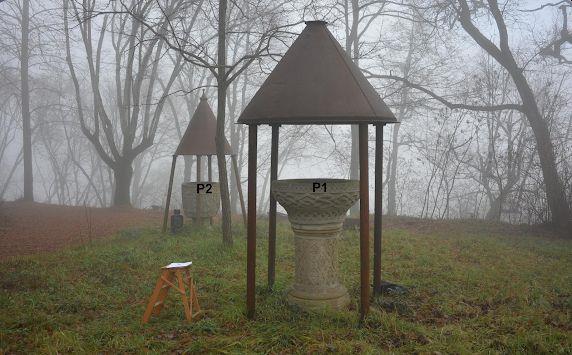
A contribution of a different kind comes from the research carried out by Roberto Neri at the Rocchetta between 2015 and 2019. Inside the round tower — the Count's laboratory — Neri found instrumentally that the electromagnetic field of the 50 Hz mains supply is almost absent, while a peak at 7 Hz and its harmonics emerges clearly.
7 Hz is the fundamental frequency of the Schumann resonances: oscillations generated by atmospheric discharges in the cavity between the Earth's surface and the ionosphere. An environment so free of artificial interference and so rich in the Earth's natural frequency is hardly accidental in a laboratory designed to capture environmental energies.
12. Orgone energy: a submerged scientific tradition
The hypothesis of the previous chapter leans on a research tradition worth reconstructing, because it explains where Mattei might have drawn his categories from.
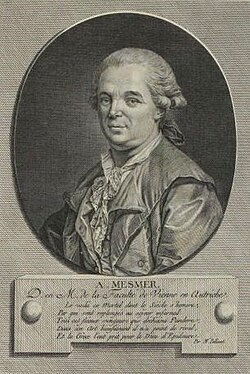
Franz Anton Mesmer (1734–1815) was the first to theorise a universal vital fluid transmissible between human beings by the laying on of hands or by magnetised objects. Expelled from the European academy, his experiments were buried under the derision of sceptics, but survived in the tradition of energy healing.
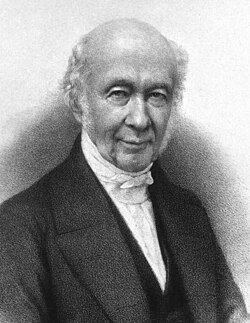
Karl von Reichenbach (1788–1869) was a leading industrial chemist — he had patented paraffin, creosote and other highly useful compounds — and yet devoted the last decades of his life to studying what he called the odic force (od or odyle), a fifth natural force detectable by sensitives as a luminescent emanation of crystals, magnets and living bodies. In the darkened laboratory of Reisenberg Castle more than a hundred sensitives from all over Austria testified, in absolute darkness, to the bluish-red light of magnets and quartz crystals. Reichenbach published his results in 1840, and Mattei read those texts attentively.
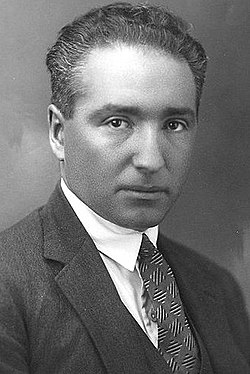
Wilhelm Reich (1897–1957), a psychoanalyst and pupil of Freud, called this same energy orgone and studied it systematically: he described its properties (attraction by organic materials, accumulation in water, emission of blue light at saturation, pulsating and irregular movement), built ORAC accumulators for the treatment of various conditions including cancer, and devised an instrument to measure it, an orgonometer based on a gold-leaf electroscope. On 10 February 1954 the American FDA sought an injunction against the distribution of the accumulators; Reich was convicted of violating the injunction, imprisoned, and died of cardiac arrest in prison in 1957. All his publications bearing the word "orgone" were ordered destroyed. Today physicians in Germany, Austria and Greece use orgone accumulators in complementary oncology; in Italy Doctor Chiurco of the University of Rome and Doctor Brizzi of the University of Bologna introduced his methods in the 1950s.
vital fluid → Reichenbach
odic force → Mattei
vegetable electricity → Reich
orgone / ORAC → Ollin Vannini
cellular memory
The conceptual thread running through this chain is identical: there would exist a level of reality, between the measurable physical and the conscious mental, accessible through specific practices. What Mattei called "electricity in the fluids", Reichenbach called od, Reich orgone, Baccolini "the energy of the synchronic lines" and Ollin Vannini "cellular emotional memory".
It must be observed precisely, however, what this continuity does and does not demonstrate. None of these authors has been formally refuted — but not having been refuted is not the same as having been confirmed. Orgone never entered physics, and the judicial persecution of Reich, however disproportionate and rightly remembered as a grave episode, does not constitute an argument in favour of the validity of his theory. What the chain documents with certainty is the existence of a recurring question, not of a verified answer.
13. Place as a therapeutic principle
To understand Cesare Mattei's medicine fully it is not enough to dwell on the composition of the remedies. One must also turn one's gaze to the place in which that conception took shape. The decision to build the Rocchetta on the slopes below Montovolo can hardly be considered accidental: it seems rather to belong to a vision of nature in which environment, life and healing are inseparable aspects of a single order.
The Count's work reveals a conception of health that is not confined to the action of the remedy upon the body, but regards the human being as part of a wider equilibrium in which the vegetable world, the landscape and the forces of nature all take part in the maintenance of life. Mattei left no systematic treatment of the significance of his choice of Montovolo, but many elements of his work and of his architecture suggest that the place itself was an essential component of his therapeutic vision.
The intuition appears particularly significant today. Modern biological disciplines describe the organism as an open system, in constant relation with its environment. Neuroscience, psychoneuroendocrinoimmunology, epigenetics and systems biology have progressively shown how physical, relational and emotional context can influence biological processes. Though belonging to a profoundly different historical context, Mattei's thought seems to anticipate, at least conceptually, this unitary vision.
And the choice is anything but neutral: the Rocchetta did not arise near Bologna nor in an easily reached location, but in a mountain territory that for centuries had held a singular place in the history, religiosity and traditions of the Bolognese Apennines.
14. Montovolo: oracular centre and sacred geography
14.1 The historical and archaeological dossier
Montovolo dominates the upper Reno valley with its two main summits, Montovolo and Monte Vigese. Its geographical position gave it, from antiquity, a prominent role along the routes linking Po-valley Etruria to Tyrrhenian Etruria. Archaeological investigations document continuous occupation since the Bronze Age and attest a significant Etruscan presence during the early Iron Age, when the Reno valley was one of the most important communication corridors between Felsina and Tyrrhenian Etruria. The studies coordinated by Marco Tamarri highlight how the mountain's dominant position favoured control of the ridge routes and of the ancient trans-Apennine itineraries.
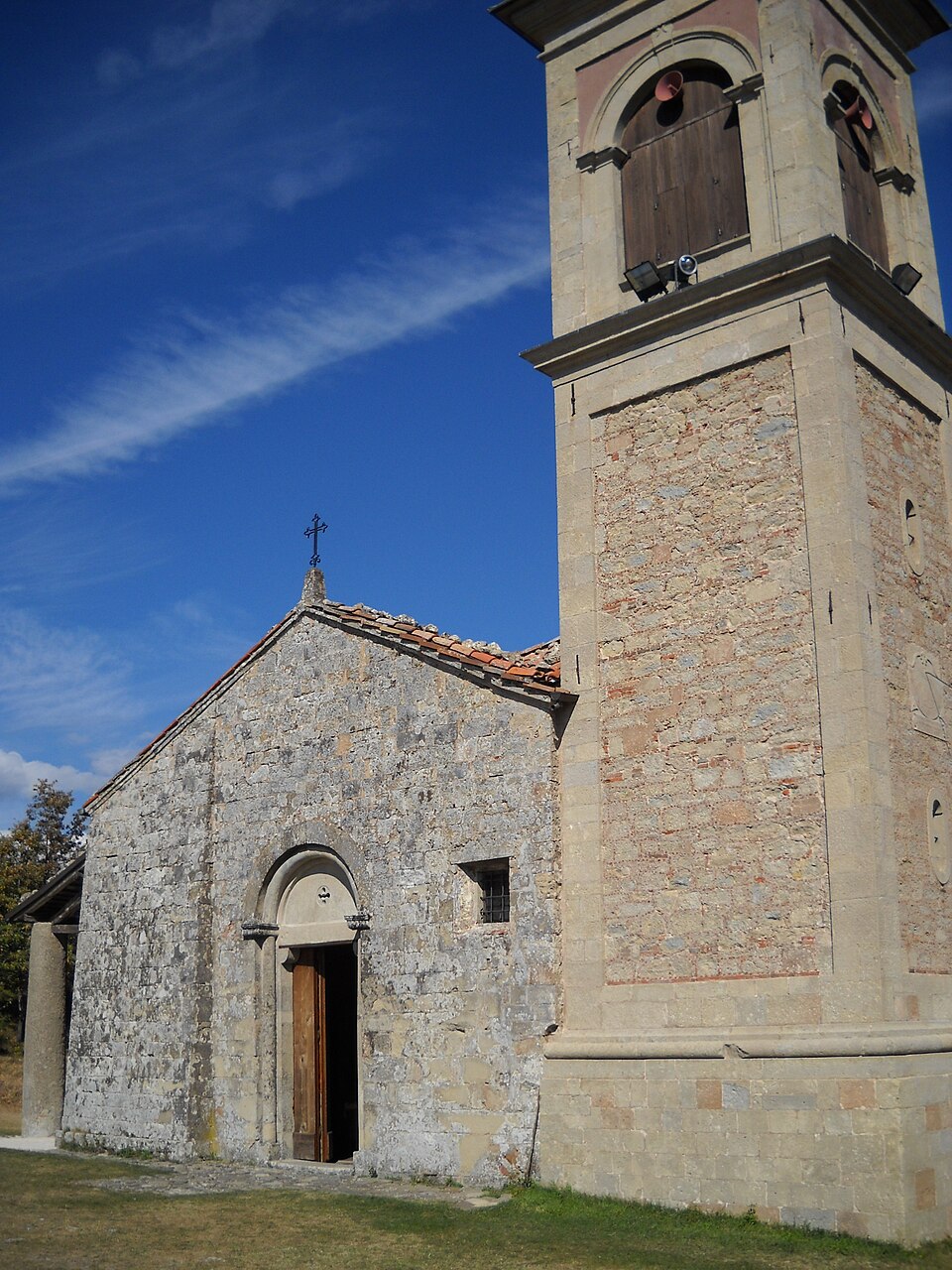
This centrality was enriched over time with a profound religious meaning. Renzo Zagnoni notes that Montovolo was for centuries considered a sacred mountain in the fullest sense, the spiritual point of reference of the whole Bolognese Apennine: the description "the Bolognese Sinai", attested in medieval sources and taken up in the volume Montovolo. Il Sinai bolognese, testifies to the continuity of a sacredness spanning different eras, cultures and traditions — and long predating the spread of Christianity. The sanctuary of Santa Maria was in all probability built over an earlier place of worship; beside it stands the church of Santa Caterina.
14.2 The stratification of cults
The sanctuary is dedicated to the Black Madonna. The mountain's name is said to derive from the sacred oval stone — Monte dell'Ovolo, Mount of the Oval Stone. Baccolini's research reconstructs a stratification: first Monte Palense, from the goddess Pales, protectress of Etruscan shepherds; then consecrated to Isis in the Roman period; finally converted to the Christian cult of the Black Virgin — one of the many Black Madonnas of Europe that several historians connect with the Egyptian goddess and her chthonic colour.
14.3 The oracular centre: symbols and finds
Onto this historical framework are grafted Baccolini's researches, the fruit of more than twenty years of study in landscape archaeology, Etruscan symbolism and classical sources. He identifies Montovolo as a probable Etruscan oracular centre and possible Omphalos, the sacred "navel" of the territory, arguing that the mountain would have performed for Po-valley Etruria a function analogous to that of Delphi in the Greek world. The comparison rests on Wilhelm Heinrich Roscher's studies of the Omphalos, on Robert Temple's research into the oracular centres of the Mediterranean, and on the testimony of Herodotus.
In the ancient Mediterranean cultures the oracular centre was not simply a sanctuary: it was the point where the human and divine worlds met, the seat of the transmission of knowledge, of the administration of religious power and of the preservation of collective memory.
Baccolini has identified in the Sanctuary's portal a series of symbols referable to this horizon. The lunette above the portal depicts a pair of facing doves — doves were messengers of the oracles, as at Dodona and Delphi — an Etruscan cross formed of five circular holes inscribed in a circle, symbol of the omphalos and not of the Christian cross, and two plants resembling the Florentine lily at the lower sides. The same symbols appear on Etruscan urns of the second and third centuries BC from Volterra, where an oracular temple is reproduced with precision.
Two elements recur with particular frequency. The first is the cross inscribed in a circle, found on some oval stones of the Etruscan necropolis of Marzabotto: whereas traditional archaeology has attributed to it a funerary or boundary-marking function, Baccolini sees in it a symbol of cosmic order and regeneration, in continuity with the iconography of the Tarquinia tombs, with the stone of Delphi and with the symbolism of the cosmic egg. The second is the lily: according to the author every great oracular centre possessed its own arboreal code, a plant species representing its identity — laurel for Delphi, oak for Dodona, acacia for Hebron, the lily for Montovolo — whose trace he follows as far as Merovingian heraldry, the French monarchy and the Florentine tradition.
In the excavations of 2011, carried out in the so-called "Crypt" of the Sanctuary — beneath the altar, remains of the ancient temple destroyed in AD 363 on the orders of the emperor Jovian — fragments were found of a capital with large incised leaves, along with other stone elements compatible with the small temple depicted on the Volterra urns. The dimensions of the capital made it possible to calculate the proportions of the whole temple: height about 4 metres, width 170 cm, with a tympanum corresponding to the lunette of the present portal. Inside, the urns show an Omphalos — the oval stone with dotted lozenges and a coiled serpent, symbol of the Sumerian god Enki, lord of fresh waters and of wisdom. The same omphalos is reproduced in the Hall of Vision of the Rocchetta Mattei, in a large ovoid sphere with coloured lozenges and a Christian cross at its apex.
Montovolo also had its own sacred spring: the Cantalia Fountain, whose seven spouts with a collecting basin recall the structure of the Castalian Spring at Delphi, where pilgrims purified themselves before consulting the oracle.
This is, it must be repeated, an interpretative proposal: solid in its gathering of materials, but not equivalent to an accepted archaeological demonstration. Its value lies in showing that the territory Mattei chose was already the repository of a cultural tradition in which nature, transformation and regeneration were central themes.
15. Synchronic lines and sacred geography
The continuity of occupation, the recurrence of symbols and the succession of places of worship belonging to different eras have led some scholars to ask whether the choice of this territory reflected a deeper knowledge of the relationship between humanity, nature and landscape. It is from this question that the current now known as sacred geography takes shape: the discipline that analyses the distribution of the great religious sites of antiquity in relation to the morphology of the land, to astronomical orientation and to the presence of springs, mountains and watercourses.
Within this panorama lie Baccolini's researches into synchronic lines: territorial alignments along which sanctuaries, places of worship, springs and archaeological features seem to be arranged with particular frequency — the equivalent of the ley lines of the Anglo-Saxon tradition. At the crossing of two or more lines, places of high energetic concentration would be created.
Montovolo would be one of these: two minor synchronic lines are said to cross exactly beneath the Sanctuary. One branch descends from the mountain westwards, crosses the river Limentra and reaches — with notable geometric precision — the site where the Rocchetta Mattei stands. The trajectory was mapped by a dowser at Baccolini's own request, and this is a methodological limitation that must be recorded: dowsing is neither a repeatable nor a validated measuring technique.
In the overall reconstruction, Montovolo, Campolo, the Sterpina spring and the Rocchetta would belong to a single organisation of the landscape, in which the distribution of sites would answer not only to defensive or settlement requirements but to a more ancient conception of sacred space.
The energy said to flow along these lines is identified by Baccolini with Reich's orgone energy (§ 12). As indirect support for the plausibility of as-yet unclassified forms of energy, he recalls that the universe is composed for about 95% of dark matter (25%) and dark energy (70%) that cannot be identified with present-day instruments. The argument is suggestive but must be handled with care: the existence of what physics has not yet explained lends no credit to any particular unexplained hypothesis.
16. The Becker–Hagens grid
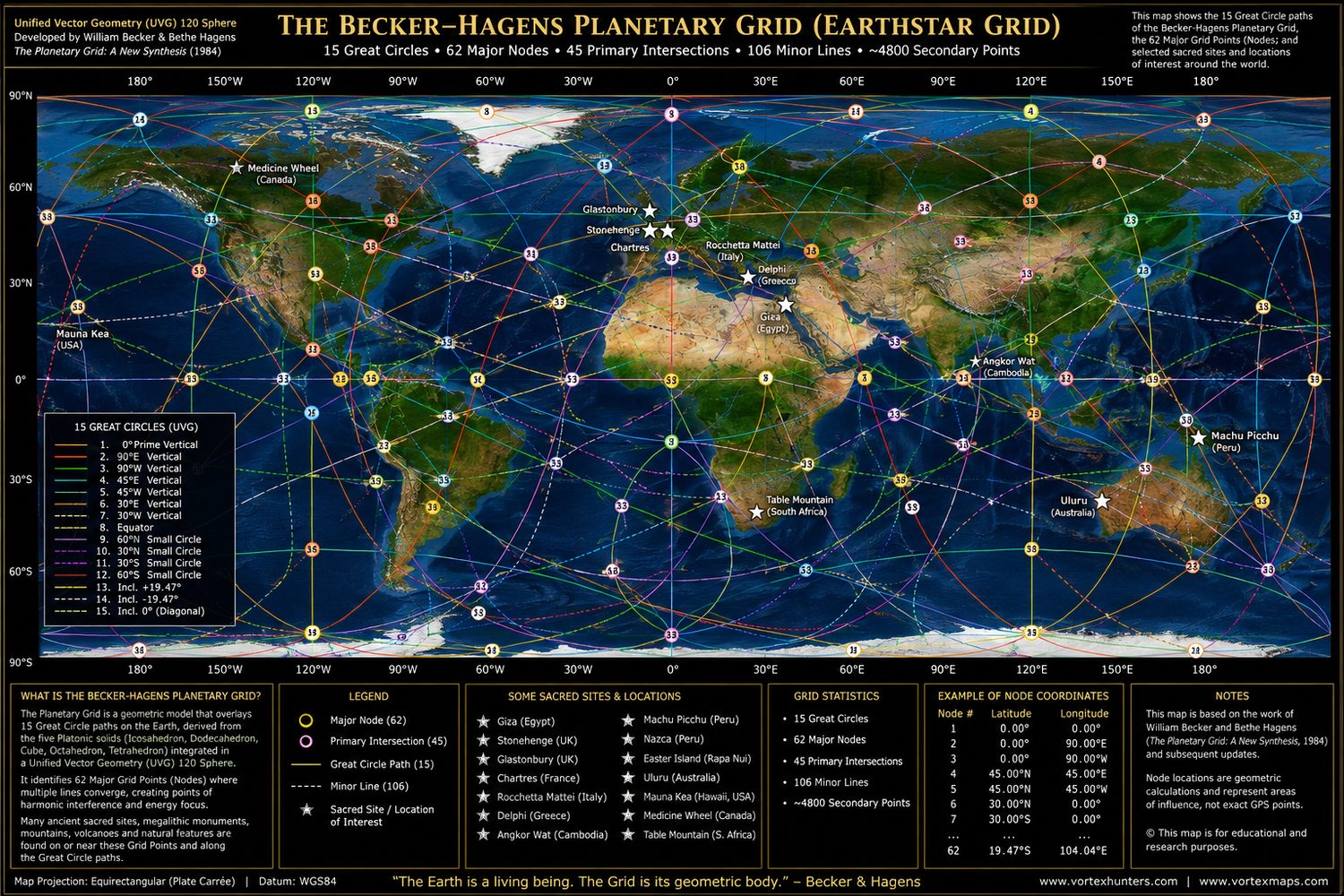
The synchronic lines find a point of comparison in one of the best-known models of contemporary sacred geography: the Becker–Hagens Planetary Grid, also known as the EarthStar Grid or Unified Vector Geometry (UVG 120 Sphere).
Developed in the 1980s by the American designer William Becker and the anthropologist Bethe Hagens, it arose from an attempt to represent the Earth's surface through a geometric structure inspired by the Platonic solids. The two authors took up studies carried out in the 1970s by the Russian researchers Goncharov, Morozov and Makarov and combined them with the principles of Richard Buckminster Fuller's Synergetics and the geometry of the five Platonic solids — tetrahedron, cube, octahedron, dodecahedron and icosahedron.
According to the model, the intersection of the polyhedra generates a network of fifteen great circles, sixty-two principal nodes, forty-five major intersections, more than a hundred secondary lines and thousands of connecting points. Becker and Hagens call these points Grid Points, Energy Nodes or Major Nodes, and observe that many of the planet's most important archaeological and religious sites appear to lie in their vicinity: the Pyramids of Giza, Stonehenge, Machu Picchu, Angkor Wat, Delphi, Easter Island, Uluru, the Nazca Lines. They have also proposed correlations with great mountain systems, volcanoes, geological faults and mineral deposits.
With that premise made, the datum remains interesting. The Italian peninsula, though without many primary nodes, is crossed by alignments affecting Emilia-Romagna, northern Tuscany, the Ligurian-Emilian area, the Upper Adriatic, the Gargano and eastern Sicily. And in several representations of the grid one of the principal intersection points is placed in the vicinity of the Rocchetta Mattei.
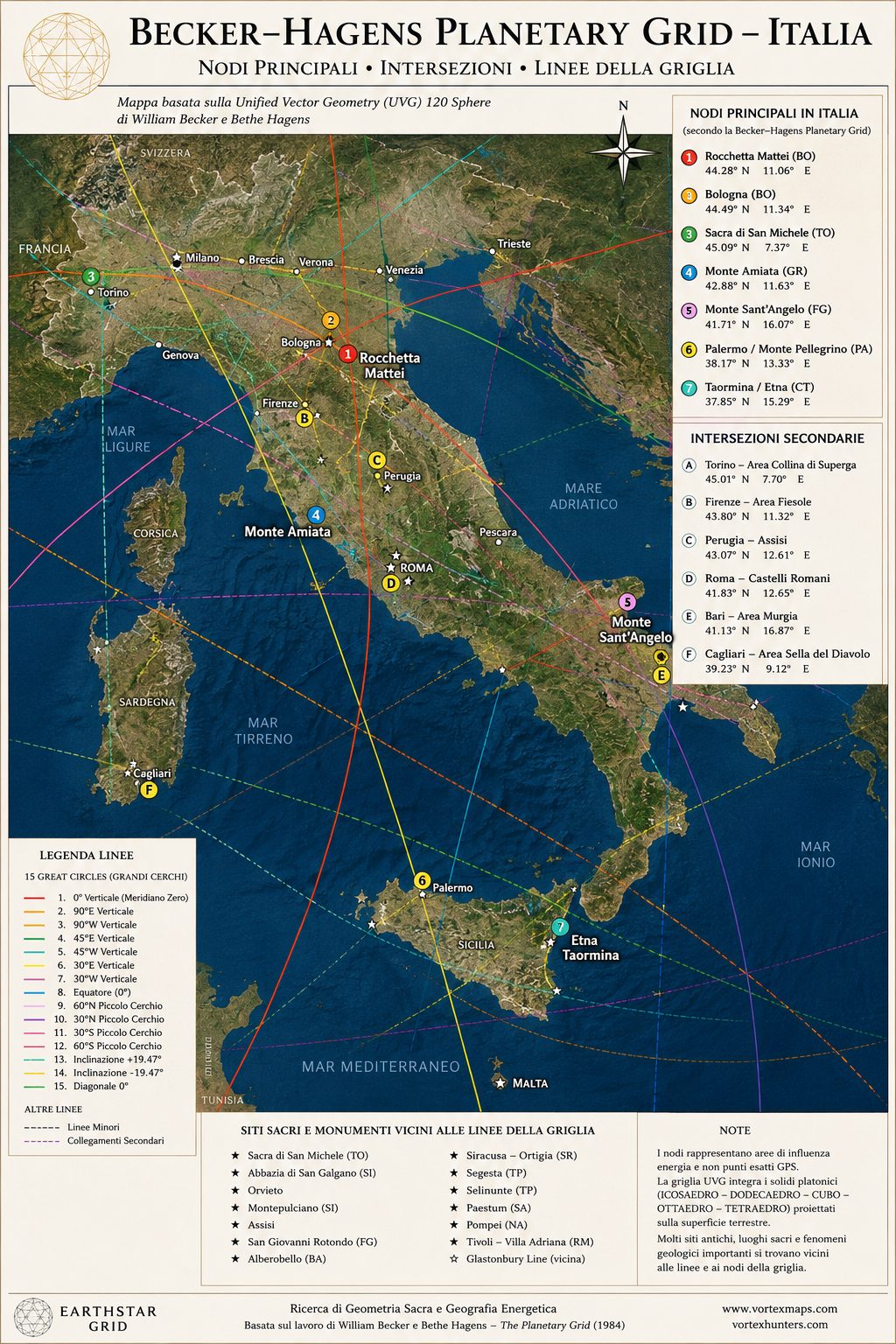
In the detailed cartography the Rocchetta indeed figures as node no. 1 of the Italian grid, at coordinates 44.28° N – 11.06° E, heading a list that includes Bologna, the Sacra di San Michele in Val di Susa, Monte Amiata, Monte Sant'Angelo on the Gargano, Monte Pellegrino at Palermo and the Etna–Taormina area. It is a suggestive association, and it should be read together with the caveat that the map's authors print at its foot — the nodes are areas of influence, not exact coordinates. That note, written by people who believe in the model, is the best reminder of how wide the margin is within which a "coincidence" is assessed.
The coincidence proves neither the validity of the model nor that of the synchronic lines. What makes it worth noting is the convergence of independent lines of research: on one side Baccolini, starting from archaeology, Etruscan symbolism and historical topography, identifies Montovolo as one of the principal religious poles of the Apennines; on the other Becker and Hagens, starting from the geometry of the Platonic solids, place the same area near one of the nodes of their global network. Two methodologies foreign to one another point to the same territory.
Cesare Mattei, obviously, could not have known a theory formulated more than a century after his death. It remains difficult, however, not to wonder at the coincidence between the position of the Rocchetta, the symbolic heritage of Montovolo, the presence of the Sterpina spring, the botanical richness of the territory and the conception of nature that emerges from Electrohomeopathy as a whole. For him the place was not an accessory element of the medicine: it was the context in which it took shape.
17. The Sterpina spring: between nature and scientific research
Among the features that characterise the landscape of Montovolo, the Sterpina spring (or Fondazza) holds a particularly prominent place. Situated at about 670 metres above sea level on the flank of Monte Vigese, in the Sterpi district, not far from Campolo and the Rocchetta, in the municipality of Grizzana Morandi, it has been known to local people for centuries for the quality of its water.
The spring rises in a largely unspoilt wooded area, surrounded by chestnut groves and rich spontaneous vegetation. Its waters flow into the Rio Bono — literally "good stream" — a place name documented since the Middle Ages and traditionally associated with the quality of the source: for Baccolini, indirect testimony to the reputation this water enjoyed among local communities.
17.1 Hydrogeological characteristics
One of the most interesting aspects concerns the extraordinary constancy of its characteristics. Measurements over recent decades show an almost constant temperature of about 7 °C, in summer as in winter, together with a stable flow — about 11 litres per minute — which undergoes no significant variation following rainfall. This behaviour distinguishes the Sterpina from many other surface springs in the area and suggests a supply from deep water circuits, relatively independent of seasonal meteorological variation.
Baccolini observes that this stability was already known to local inhabitants, who distinguished the Sterpina from other springs precisely by the clarity of its water and the regularity of its flow: while many sources grew turbid after heavy rain, the Sterpina kept its characteristics unaltered. Alongside this, a long popular tradition has attributed to it properties favourable to health — testimonies that belong to the historical memory of the territory and constitute an ethnographic heritage of considerable interest, though they cannot in themselves constitute demonstrations of therapeutic efficacy.
17.2 The chemical analyses: phytoestrogens and the phosphorus anomaly
The analyses have revealed the presence of benzoic acid, salicylic acid and above all of isoflavones — equol, daidzein and biochanin A — at a total concentration of about 1.6 mg/L. These are natural phytoestrogens: they bind to oestrogen receptors and modulate female hormonal balance. The documentation gathered over more than sixty years of observation reports that all the infertile women treated with this water became mothers. Equol is further credited with anti-ageing effects, protection of bone mass, reduction of cholesterol and prostate benefits.
To these data are added the analyses carried out in 2018 at the Department of Industrial Chemistry of the University of Bologna, coordinated by Dr Alberto Mucchi using atomic emission spectrometry (MP-AES Agilent 4210).
| Calcium | 92.7 mg/L |
|---|---|
| Magnesium | 5.2 mg/L |
| Silicon | 5.1 mg/L |
| Sodium | 5.0 mg/L |
| Potassium | 1.01 mg/L |
| pH | 7.7 – 8.0 |
| Temperature | ~7 °C constant |
| Dry residue | ~304 mg/L |
| Total phosphorus | ~12 mg/L |
The analyses showed the absence, within the limits of instrumental detection, of heavy metals such as lead, mercury, cadmium, arsenic and nickel: a water of high chemical purity.
The figure that most caught the researchers' attention is the total phosphorus concentration of about 12 mg/L — a value that according to Baccolini is markedly higher than that reported for the great majority of commercial mineral waters. It is no marginal detail: phosphorus lies at the centre of Baccolini's own research into the origin of life and the role of pentacoordinate phosphorus intermediates.
To explain the anomaly he advances two alternative hypotheses. The first is that the territory of Monte Vigese preserves traces of ancient volcanic activity, which over geological time would have favoured the transformation of insoluble phosphate minerals into more readily dissolved compounds. The second invokes the long residence of the water underground, during which organophosphorus compounds derived from the slow degradation of plant matter might form or be released. Baccolini himself stresses that both require further experimental verification and that the precise chemical nature of the phosphorus compounds present remains to be defined.
Subsequent investigations using high-resolution mass spectrometry extended the analysis to the organic component, identifying numerous natural compounds referable to flavonoids, phenolic acids and other molecules of plant origin, in extremely low concentrations but potentially significant biologically — plausibly a consequence of the water's long contact with the forest soil of Monte Vigese.
As for the age of the water, assessments attributed to technicians of ENEA indicate a residence underground of more than fifty years before resurfacing: a circumstance that would explain both the constancy of its physical properties and the slight influence of weather events, and which also makes this water less radioactive than average.
17.3 The serpent's treasure
The legend of the "treasure of Montovolo" guarded by a serpent near the spring takes on, at this point, a double meaning: the serpent — symbol of Enki, of subterranean waters and of wisdom — would indeed be guarding a biochemical treasure hidden in the waters of the mountain. And the fact that Mattei took an interest in this treasure fits the picture of a man who had recognised something exceptional in that place.
18. The electric fluids as charged water: Baccolini's hypothesis
The convergence of the threads of Part IV leads to the most demanding interpretative proposal of the entire essay.
The 1890 analyses had revealed that all five fluids were water with a high and identical salt concentration — incompatible with rainwater, whose salinity is almost nil, and consistent instead with spring or river water. Baccolini's grandfather recalled that the Count went regularly down to the Limentra to collect water with tiny pebbles in it.
The Limentra is crossed, in the author's reconstruction, by the synchronic line that descends from Montovolo towards the Rocchetta: that water would therefore carry within it a share of the mountain's energy. Mattei collected it, took it up into the Tower of Vision — the orgone accumulator — and concentrated the energy in it further. The result would have been charged water: the five fluids would differ not in chemical composition but in the level and type of energetic charge impressed in each session. The difference between Red Fluid and Blue Fluid would not be chemical, but energetic.
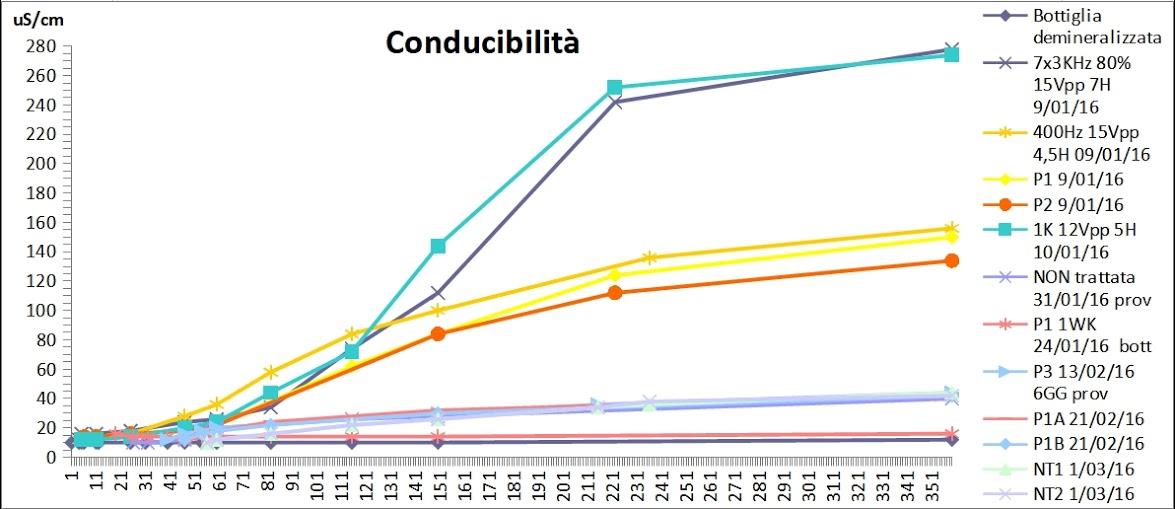
In indirect support, Neri (2019) verified experimentally that electromagnetic fields can alter the conductivity of demineralised water without any addition of salts: water treated with a 1 kHz sinusoidal field reached 274–278 μS/cm against an initial 10 μS/cm. The frequency of 7 Hz — the same one measured as dominant in Mattei's laboratory — proved necessary in experiments on the transfer of information to water: in its absence the results are not reproduced.
The mechanism, in this reduced form, requires nothing supernatural: water exposed to certain electromagnetic fields is, physically, different from untreated water. But two claims of very different scope must be distinguished. That a field alters the conductivity of a water is measurable and verified; that an alteration of this kind translates into a therapeutic effect, and that it is preserved in the bottle all the way to the patient, is a leap the available data do not cover.
Finally, the explanation of the decline. After the Count's death his adopted son Mario Venturoli — who added windows to the English Room, removed some of the antennas and reorganised the interiors in Liberty style — is said to have unwittingly destroyed the mechanism. Without darkened windows, without the four orthogonal antennas, without the collecting roof, the laboratory was no longer an accumulator. The remedies continued to be produced to the same herbal formulas but — Baccolini writes — deprived of the charge they were at best ordinary homeopathic medicines.
It is an elegant explanation, with the merit of accounting for an otherwise curious fact: the coincidence between the refurbishment of the tower and the decline in results. It is not, however, the only explanation compatible with that fact, and this essay does not present it as demonstrated.
19. The systemic conception of health
During the nineteenth century European medicine lived through one of the greatest revolutions in its history. Pathological anatomy, microbiology and experimental physiology profoundly changed the way the human body was observed: disease began to be studied through the alterations of tissues, of cells and, subsequently, through the identification of the microorganisms responsible. This approach laid the foundations of modern medicine and made extraordinary progress possible.
Alongside these results, however, an inevitable consequence developed: the body was progressively divided into organs, systems and ever more specific specialisms. Each discipline deepened its own field, but the organism observed as a whole seemed slowly to vanish from medicine's horizon.
It is in this context that Mattei's thought developed. While sharing with the scientists of his time the desire to understand the laws of nature, he followed a different road: in his vision the human body was not the sum of its organs, but a living system in which every part contributed to the balance of the whole. Disease was not the damage of an organ, but the expression of a loss of overall harmony; and therapy did not aim at the suppression of the symptom, but at the restoration of general balance.
20. Bioelectricity: from Mattei's intuition to cellular communication
Among the most original aspects of Mattei's thought, the most fascinating is certainly the concept of electricity. Not a word chosen to distinguish his therapy, but a central principle: the very name Electrohomeopathy expresses the conviction that within the organism there exists a form of energy capable of regulating the functioning of life, and that disease may be connected with an alteration of that balance.
The meaning Mattei gave the term belongs fully to nineteenth-century scientific culture and does not coincide with what modern physiology calls bioelectricity. It would be incorrect to superimpose the two perspectives. It is interesting, however, to observe how that very term has become one of the central concepts of contemporary biology.
The nineteenth century was the century of the first great research on animal electricity. Galvani's experiments showed that frogs' muscles contracted in response to electrical stimuli; there followed the research of Volta, which led to the battery, and that of Carlo Matteucci and Emil du Bois-Reymond, who demonstrated experimentally the existence of electric currents in muscles and nerves, laying the foundations of electrophysiology. At that time, however, the biological role of electricity was still little understood: the term was used in a general sense to denote a vital force, without its mechanisms being grasped.
Today the picture has profoundly changed. Every living cell possesses its own membrane electrical potential, generated by the different distribution of ions between inside and outside and maintained by the activity of ion pumps and channels: without it cells could not communicate, adapt to their environment or carry out their functions.
For many years it was thought that electrical activity concerned almost exclusively the brain, nerves and muscles. Today we know that all cells use bioelectric signals to coordinate their behaviour: bioelectricity takes part in proliferation, cell migration, tissue differentiation, wound healing, inflammatory processes and even the development of the embryo. Electricity is not a mere effect of cellular life, but one of the languages through which life organises itself.
The decisive turning point came in 1952 with the studies of Alan Hodgkin and Andrew Huxley, who described the ionic mechanisms responsible for generating the action potential in nerve fibres — work awarded the Nobel Prize for Medicine in 1963.
In recent decades research has widened the perspective still further. The American biologist Michael Levin has devoted much of his work to developmental bioelectricity, showing that specific bioelectric patterns participate in morphogenesis, tissue regeneration and the spatial organisation of the organism: by artificially modifying cellular electrical gradients it is possible to influence the behaviour of cells during development. Bioelectricity thus appears as a genuine system of biological communication, able to converse with genes and with biochemical signals.
Alongside this perspective stand the studies of the Italian physician and biologist Carlo Ventura. In the field of regenerative medicine and stem-cell research, Ventura has shown how cellular behaviour depends on the integration of different forms of information: besides biochemical signals, cells are sensitive to mechanical, electrical, electromagnetic and vibrational stimuli, translated into biological responses through processes of mechanotransduction. Ventura's group has also explored the possible role of molecular oscillations and biophotonic activity in communication between cells — a field still evolving, which requires further experimental confirmation.
21. From matter to fields
For many centuries science observed the world as a great machine: every phenomenon could be explained by breaking it down into its smallest parts and studying them separately. This vision, born with Newton's classical physics, also profoundly influenced medicine, which learned to divide the body into organs, tissues, cells and molecules — with extraordinary results.
During the twentieth century, however, physics began to tell a different story. The work of Max Planck, Albert Einstein, Niels Bohr, Werner Heisenberg, Erwin Schrödinger and Louis de Broglie progressively modified the very way matter is conceived. At the smallest observable scales, nature follows rules profoundly different from those of everyday experience: elementary particles cannot be described as tiny material objects, and their behaviour is represented through mathematical functions describing probability distributions.
This does not mean that matter does not exist, nor that the physical world is an illusion. It means that reality is more complex than classical physics had imagined. Although objects appear solid to us, matter consists almost entirely of space: the nucleus occupies an infinitesimal portion of the atomic volume, and the solidity we perceive arises from the interaction between particles, fields and electromagnetic forces.
The language of physics has changed too. Where classical science placed matter at the centre, contemporary physics increasingly uses the concept of the field: according to quantum field theory, particles can be interpreted as localised manifestations of fields distributed in space.
The transformation has had consequences in the life sciences as well. Biology today no longer describes the organism as a set of independent structures, but as a network in which information circulates continuously through biochemical, bioelectric, mechanical and electromagnetic signals. And the human body lives through continual oscillations: heartbeat, brain electrical activity, respiration, circadian rhythms, hormonal variations, intracellular processes. Life is not a static condition, but a dynamic equilibrium built through the continual synchronisation of processes.
When Mattei developed Electrohomeopathy the structure of the atom was unknown, bioelectricity had not been described and cell physiology was taking its first steps. The language of the age was inevitably different from ours. What can be put into dialogue are not the explanations — a mathematical theory experimentally verified on one side, a nineteenth-century therapeutic system on the other — but the change of perspective: if physics has progressively abandoned a purely mechanistic conception of matter, biology too now describes the living being as a network of relations, information and dynamic processes.
22. Biological memory: adaptation, epigenetics and neuroscience
When we think of memory we almost always imagine the brain. In recent decades this view has widened: neuroscience, immunology, epigenetics and cell biology have shown that experience can leave traces at various levels of the organism. The expression biological memory does not today denote a single mechanism, but a set of processes through which the living being stores information, modifies its own functioning and prepares future responses on the basis of what it has already encountered. Memory, from this perspective, is not only the ability to remember: it is also the ability to adapt.
Synaptic plasticity. The studies of the Nobel laureate Eric Kandel showed that learning concretely modifies the connections between neurons: every experience can strengthen some neural networks, weaken others, build new response pathways. The brain is not a rigid organ — it changes as we live. Repeated experiences trace ever more accessible pathways, like a woodland trail that becomes more evident each time it is walked. Mental experience does not remain separate from the body: it translates into physical changes observable in the nervous system.
Immunological memory. When the immune system meets an infectious agent for the first time, it mounts a specific response and retains cells capable of recognising it in the future: this is the principle on which vaccination rests. There is no conscious recollection whatsoever, and yet certain cells preserve information derived from the earlier experience. Even a system without thought can possess its own form of memory.
Epigenetics. The term was introduced in the 1940s by the British biologist Conrad Waddington, who had intuited that the development of organisms depended not only on genetic inheritance but on the continual dialogue between genes and environment. Today we know that diet, physical activity, exposure to chemicals, stress and social conditions can influence gene expression: genes represent a possibility, not a closed programme. Among the most significant studies are those of Michael Meaney and Moshe Szyf on the relationship between early experience and the regulation of the stress response, who observed how different conditions of care in the first phases of life may be associated with epigenetic modifications in the genes involved in regulating the hypothalamic-pituitary-adrenal axis.
Allostasis and allostatic load. The studies of Bruce McEwen showed that the body maintains its balance not by remaining still, but by adapting continuously to the demands of the environment. Faced with a stressful situation, the nervous, endocrine and immune systems activate coordinated responses; if the situation ends, the organism can return towards equilibrium. When instead the activation recurs too often or persists too long, what McEwen called allostatic load develops: the biological cost of an adaptation that has become chronic. A response born to protect us can thus turn into a source of imbalance.
Cellular memory. Every cell possesses the same genetic inheritance, and yet a liver cell behaves in a profoundly different way from a neuron, because each keeps some genetic programmes active and others inactive. This organisation is preserved even after numerous divisions: the capacity to maintain one's own identity is a form of memory, indispensable to development and to the stability of tissues.
Mattei knew nothing of synapses, epigenetics, immunological memory or systems of stress regulation. He did, however, conceive the organism as a dynamic reality, capable of losing and regaining its balance, and disease as the expression of a modification of the whole living system. Research on biological memory does not confirm Electrohomeopathy; it does show, however, that the living being is genuinely capable of preserving the effects of experience through numerous mechanisms distributed across the brain, the cells, the immune system and the processes of physiological regulation. The meeting point is not a shared theory: it is a shared question — in what way does a lived history modify the health of the organism?
23. Intuitive knowledge in the world's cultures
Long before the birth of scientific medicine, every civilisation had developed figures considered capable of accessing a different form of knowledge: a knowledge derived not exclusively from rational observation, but from intuition, inner experience, contemplation, dream or meditation. Shamans in Siberian and Amerindian cultures, priests of ancient Egypt, oracles of Greece, druids of the Celtic world, rishis of Vedic India, Buddhist monks, Taoist masters, African healers, curanderos of Latin America, Christian mystics and Sufis of the Islamic world: though belonging to extremely different traditions, they shared the conviction that the human being could enter into relation with a dimension of reality not immediately accessible to the ordinary senses.
Their function was not only religious. In many cultures they were the physicians, the counsellors, the interpreters of dreams, the experts in medicinal herbs, the observers of nature and the keepers of collective memory.
Observing the history of humanity, a remarkable fact emerges: peoples separated by thousands of kilometres and without any contact developed very similar conceptions of health. In almost all ancient traditions the body was not a machine made of independent organs, but a living system in constant relation with its environment, its community and a spiritual dimension of reality. Healing did not consist in eliminating a symptom, but in restoring a lost balance.
These experiences are interpreted differently according to one's perspective: for some they represent real contact with a transcendent dimension; for others, particular neurophysiological states of consciousness; for others still, unconscious processes of symbolic elaboration. Contemporary research has studied meditation, trance, hypnosis and altered states of consciousness for decades, documenting how such conditions are associated with specific modifications of brain activity. This does not imply that spiritual interpretations can be confirmed or refuted by science: it means rather that inner experience is a real phenomenon, whose interpretation depends on the cultural frame of reference.
The history of knowledge shows, moreover, that many intuitions preceded their explanation by centuries. The therapeutic properties of many medicinal plants were known to traditional medicines long before the identification of their active principles; contemplative techniques developed thousands of years ago are studied today by neuroscience. This does not mean that every intuition should be considered true: history is also strewn with errors, groundless beliefs and abandoned interpretations. The progress of knowledge arises precisely from the continual dialogue between intuition, experience, observation and verification.
24. Visionaries and pioneers: when intuition precedes knowledge
Every age has been crossed by men and women capable of imagining a reality their contemporaries could not yet see. Some were welcomed with enthusiasm, others derided, opposed or ignored.
Leonardo da Vinci imagined flying machines and anatomical instruments realisable only centuries later. Nikola Tesla conceived systems of energy transmission that anticipated much of the electrical development of the twentieth century. Gregor Mendel described the laws of heredity when no one yet knew of the existence of DNA. Ignaz Semmelweis grasped the importance of hand hygiene in obstetrics decades before the germ theory of infection. Barry Marshall went so far as to swallow Helicobacter pylori to demonstrate that many gastric ulcers were caused not by stress but by a bacterial infection, overturning convictions rooted for more than a century.
The visionary is not necessarily someone possessing supernatural knowledge, but someone who manages to grasp connections others cannot yet see: he observes apparently unrelated phenomena, puts them into relation and builds a new hypothesis. That hypothesis may then be confirmed, modified or abandoned — but it is the initial creative act that makes progress possible.
Contemporary psychology interprets intuition as an extremely complex mode of processing, in which the brain unconsciously integrates an enormous quantity of information accumulated through study, experience and observation; when this reaches a new level of organisation, the solution may emerge suddenly into consciousness as an apparently spontaneous idea. Many scientists have recounted experiences of this kind: Henri Poincaré described his mathematical intuitions as sudden illuminations; Friedrich Kekulé told of having imagined the ring structure of benzene after seeing in a dream a serpent biting its own tail; Albert Einstein attached great value to thought experiments and to imagination.
Carl Gustav Jung too devoted attention to the theme: in his theory of the psychological functions, intuition represents a fundamental mode of knowing, distinct both from sensory perception and from logical thought, capable of grasping possibilities and relations not yet manifest. In parallel, the philosophy of science has shown that the birth of great theories almost never follows a linear path: Karl Popper stressed that scientific method provides no rules for generating new ideas, but only tools for testing them. The origin of intuition remains a creative moment preceding experimental verification.
It is within this framework that the figure of Cesare Mattei can be placed. To reduce his work to that of a mere compounder of remedies would be limiting: he was an attentive observer of nature and a tireless experimenter, but also a man capable of imagining a medicine radically different from that of his time. To call him a visionary is not to attribute supernatural powers to him: it is to recognise that he possessed the disposition common to many innovators, that of imagining new relations when the dominant knowledge was organised according to different categories. Some of his intuitions have proved incompatible with later knowledge; others can be reread today in a different light — not because they were already correct in the modern sense, but because they expressed the attempt to move beyond a fragmented vision of the human being.
Perhaps the distinguishing trait of the great visionaries lies less in possessing definitive answers than in having the courage to formulate questions their own age is not yet ready to ask.
25. Ancestral memory and informed fields
Where does memory really reside? We are used to imagining it as an exclusive function of the brain, but many cultures have supposed that it does not belong to the individual alone. The Vedic traditions speak of the Akasha, a Sanskrit term denoting a subtle space in which every experience in the universe would leave a trace; in Platonic philosophy knowledge is described as reminiscence; many shamanic traditions tell of a great field of ancestral memory, accessible through particular states of consciousness.
In the twentieth century the reflection takes a new form with Carl Gustav Jung. Through decades of clinical observation, Jung noticed that many symbols, images and myths recurred spontaneously in individuals from wholly different cultures, and introduced the concept of the collective unconscious: a deep stratum of the psyche shared by all humanity and populated by the archetypes, universal symbolic forms that surface in dreams, myths and religions. This is not memory in the biological sense — not an archive of personal recollections, but a shared symbolic structure that shapes the way human beings organise experience. The theory belongs to analytical psychology and does not constitute an experimental demonstration, though it has profoundly influenced studies of culture and depth psychology.
Still broader models have been proposed by other authors. The British biologist Rupert Sheldrake developed in the 1980s the theory of morphic resonance: living organisms would be influenced not only by genes and environment, but also by organising fields that would preserve a kind of memory of previous forms and behaviours. It is a hypothesis that has not been accepted by academic biology.
Perhaps the most important value of the concept of an informed field lies not in providing a new theory of memory, but in inviting us to move beyond a rigidly individualistic view of knowledge. Each of us is born immersed in a web of relations that precedes our own existence: the language we speak, the gestures we learn, the emotions we learn to recognise, family beliefs, cultural values and even certain modes of responding to stress are transmitted through a continual interweaving of biological, psychological and social experience. From this point of view, every individual really is the bearer of a memory greater than themselves — and no exotic hypothesis is needed to say so.
Mattei too, on his own path, seemed to move by a tension towards a wider understanding of nature: he did not sharply separate the body from vital energy, empirical observation from intuition, matter from the forces that organise it. It would be improper to claim that he spoke of informed fields in the contemporary sense of the term, but it is evident that his vision sought a level of order going beyond the mere sum of the parts.
26. Water as memory, symbol and information
Few substances have accompanied the history of humanity with the same intensity as water. Before it ever became an object of chemical study, ancient civilisations already regarded it as the origin of life, the principle of purification, the go-between linking the visible and the invisible worlds. From the immersion rites of ancient Egypt to the sacred baths of India, from Christian baptism to Islamic ablutions, from the therapeutic springs of Europe to the rituals of indigenous peoples: it is hard to find a culture that has not attributed symbolic and therapeutic value to it.
Today science describes water as an apparently simple molecule, but behind that simplicity lies one of the most complex systems in nature. Water makes up most of cellular mass, takes part in practically all biochemical reactions, regulates body temperature, transports nutrients and metabolites, maintains the structure of proteins and nucleic acids. Its molecules bind continually to one another through hydrogen bonds, forming networks that build up and dissolve in extremely short times: a system in constant movement, highly sensitive to temperature, pressure, the presence of salts, proteins, biological membranes and contact surfaces.
It is this complexity that has fed a question as fascinating as it is controversial: can water preserve information?
The issue became famous in 1988, when the French biologist Jacques Benveniste published in Nature a study according to which extremely dilute solutions continued to produce biological effects even after the disappearance of the original molecules. The hypothesis aroused enormous interest, but subsequent attempts at replication failed to confirm the results convincingly. In later years the Nobel laureate Luc Montagnier also took an interest in the possibility that some aqueous solutions might preserve electromagnetic signals associated with biological structures: his research fuelled a new international debate, but has not found sufficient experimental confirmation to enter the established body of knowledge in physics or biology.
Alongside the scientific debate a vast literature has developed belonging to complementary medicine and spiritual traditions, whose best-known author is the Japanese Masaru Emoto, celebrated for photographs of ice crystals which, on his interpretation, would take different forms in response to words, music or thoughts.
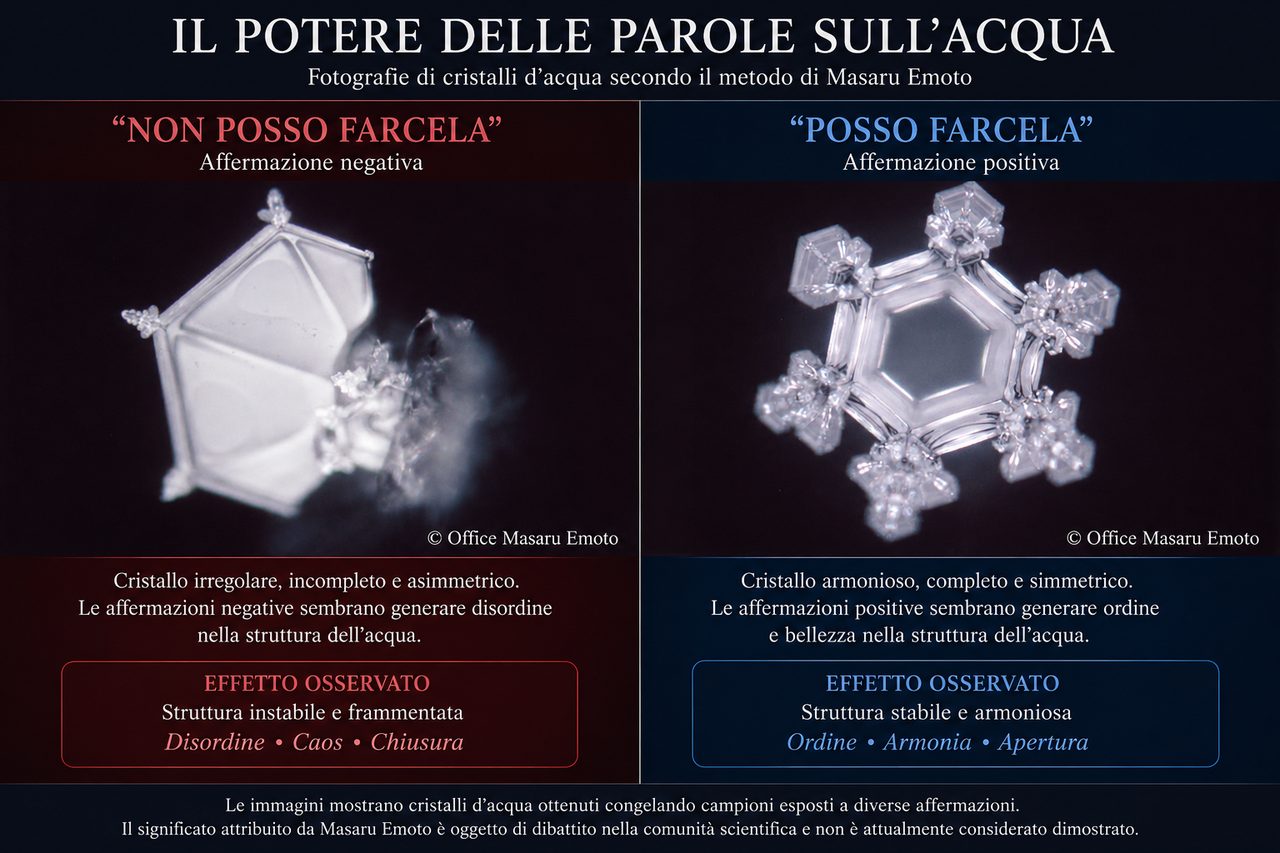
The images have had an enormous cultural impact, but from a scientific point of view the experiments were not considered sufficiently controlled, nor have they received independent confirmation. The methodological limitation is precise and worth stating: the selection of which crystals to photograph was not blind, and in a frozen sample crystals of every degree of regularity form: by choosing which ones to record, one can illustrate any thesis whatever. They remain interesting testimonies on the symbolic and cultural level, not experimental demonstrations.
The distance between the language of science and that of the symbolic traditions need not, however, be read as a conflict: they often answer different questions. Science seeks to understand the mechanisms by which phenomena occur; the symbolic traditions seek to give them a meaning within human experience. From this perspective the value attributed to water in ancient cultures appears significant: it represents the flow of life, continual transformation, the memory of origins, rebirth. To immerse oneself in water is symbolically to return to the beginning — a language that speaks to the psyche before it speaks to physiology, and it is no accident that amniotic fluid envelops us for nine months before birth.
Cesare Mattei too attributed a particular importance to water. The Sterpina, like the Limentra, was not simply a natural resource but part of the whole therapeutic design: for Mattei nature was a living organism in which water, plants, territory and environment all took part together in the process of healing. Though he lacked modern biochemical and biophysical knowledge, he had intuited that the context in which a remedy is born is not a secondary element, but an integral part of its efficacy — a vision that finds resonance today in environmental medicine and systems biology.
And one fact remains that no one disputes. Independently of the question of memory, water remains the principal vehicle of life on Earth and the medium through which every organism maintains its internal organisation: every cell lives immersed in water, every biological exchange occurs thanks to water, every vital process depends on its presence.
26.1 The parallel with cellular memory, and its limits
Here lies the most suggestive parallel of the whole essay. The EMH (Emotional Memory Healing) of Francesca Ollin Vannini postulates that intense emotional experiences leave imprints in the cells and in gene expression; Baccolini describes the water of the Limentra as "carrying within it the energy of Montovolo". In both cases a material structure acts as the support of non-chemical information: the substrate differs — water against DNA — but the logic is the same.
In the Manuale della Strega Moderna (OM Edizioni, 2018) Ollin Vannini teaches, moreover, how to "energise water" through herbs, lunar rituals and directed intention: a practice structurally analogous to the Count's, who had the Limentra as ritual water, the Tower of Vision as a darkened laboratory and the charging sessions as protocol. That the practice of impressing information on water runs across cultures and centuries — from popular women's traditions to aristocratic laboratories — is a documented ethnographic fact.
It must be observed, however, that the two terms of the parallel do not have the same epistemic standing: biological memory is documented by a broad body of experimental research (§ 22), whereas the memory of water has so far not survived attempts at replication. The analogy is conceptually elegant; it is not, for the moment, a demonstration. To acknowledge this does not weaken the essay: it makes it usable.
27. From the organ to the person, from disease to life
Every scientific revolution is born when the previous paradigm is no longer sufficient to explain the complexity of reality. Contemporary medicine represents one of the greatest achievements in human history: antibiotics, vaccines, surgery, intensive care, diagnostic imaging, molecular genetics and pharmacology have saved millions of lives. It would be impossible to imagine the medicine of the future giving up these advances.
And yet a new awareness is emerging. Many conditions of contemporary society — chronic diseases, persistent inflammatory syndromes, autoimmune conditions, functional disorders, psychosomatic manifestations — cannot be understood by looking exclusively at the single organ involved: they arise from the interaction of multiple biological, environmental, relational and emotional factors that influence one another over time. To understand a disease means not only identifying the mechanism that produces it, but also the living system in which that mechanism takes shape. It is not enough to observe the symptom: one must understand the person who manifests it.
Contemporary research describes the human body as a dynamic network of interconnected systems. The nervous system converses with the immune system; the endocrine system modifies metabolism and brain activity; the gut microbiota influences immune regulation and the production of neurotransmitters; genes respond to environmental stimuli; cells communicate incessantly through electrical, chemical and mechanical signals. No cell exists in isolation; no organ works for itself alone.
This characteristic does not concern the human body alone: it is one of the fundamental principles of life. Observing a natural ecosystem one discovers that survival depends not exclusively on competition but above all on cooperation: through underground fungal networks trees transfer nutrients to younger individuals and signal conditions of danger; bacterial colonies, beehives, coral reefs and the microbiota all show how life tends to build cooperative systems.
Hence a question destined to change the way we look at the symptom. If all of biology tends towards the conservation of life, is it really correct to consider the body an enemy that suddenly decides to attack itself? Or does what we call a symptom represent, at least in many circumstances, the result of an attempt at adaptation by the organism to conditions perceived as threatening?
The question requires prudence: not all symptoms can be interpreted in the same way, and no theoretical reflection can replace medical diagnosis or the search for organic causes. But the perspective does not eliminate biological causality — it widens it. An infection continues to be caused by a microorganism; a genetic mutation retains its role; a physical trauma keeps its clinical evidence. The way each organism faces these events, however, also depends on its own biological history, on the level of regulation of the nervous system, on immune balance, on relational context and on the adaptive capacity developed over the course of a lifetime.
This is exactly what Mattei called, in the vocabulary of his century, the terrain: not the single diseased organ, but the overall condition that makes an organism more or less open to attack. From this perspective arises the need to move beyond oppositions that are ever less useful: there is no medicine "against" another medicine. Emergency medicine, surgery, pharmacology, genetics, rehabilitation, psychology, neuroscience and systemic models are not incompatible visions, but different instruments for understanding different levels of the same biological reality. The aim is not to replace the biomedical paradigm, but to complete it with a vision that recognises the human being in their entirety.
28. The birth of Emotional Memory Healing
Every method is born of a question. Emotional Memory Healing was born of a search.
In 2017, after many years of working with people and of study in apparently distant fields, Francesca Vannini began to perceive a common thread capable of uniting bodies of knowledge until then considered to belong to different worlds. On one side neuroscience, PNEI, biological medicine, trauma studies, neuroplasticity, epigenetics and cellular communication; on the other much older disciplines — shamanism, spirituality, wisdom traditions, symbolic practices — which for millennia have regarded the human being as an indivisible unity of body, emotions, mind and consciousness. Though using profoundly different languages, all seemed to describe the same phenomenon: the human being is a living system capable of recording, preserving and transforming experience.
In the course of working with thousands of people a constant also emerged. Many understood their own story perfectly. They knew why they were suffering. They had already followed therapeutic paths. And yet they continued to repeat the same relational, emotional and behavioural patterns.
Knowing a story does not necessarily mean transforming it.
There existed a level deeper than mere rational understanding: the level of memory. From this intuition EMH was born — not as a new technique, but as an integrated model capable of bringing recent scientific findings into dialogue with a systemic vision of the human being.
29. EMH: an integrated model of emotional memory
The hypothesis from which the method starts is simple: every significant experience simultaneously involves the body, the nervous system, the emotions, memory, relationships and meaning. Consequently, transformation too requires work capable of engaging these levels simultaneously. Every experience in fact leaves a trace on several planes at once: it modifies the nervous system, influences the physiology of stress, builds new neuronal connections, attributes meanings, organises relational patterns and helps to create what we now call implicit memory.
EMH rests on five levels in constant dialogue with one another.
- The neurobiological level. Every experience modifies the brain. Neuroscience has shown that the nervous system possesses an extraordinary capacity to reorganise itself through neuroplasticity, and that the process of memory reconsolidation allows earlier learning to be transformed. The method uses these principles to foster new corrective emotional experiences.
- The biological level. The organism is regarded as a complex system. PNEI, biological medicine and studies of cellular communication and bioelectricity show how apparently separate systems converse continually: the symptom is not observed as an isolated event, but as part of a wider biological balance.
- The level of memory. Experiences are not preserved only as conscious recollections: neuroscience distinguishes different forms of memory, many of which operate outside awareness, and epigenetics shows how the environment can modulate the organism's biological expression. EMH regards memory as a dynamic process involving brain, body and experience together.
- The systemic and relational level. No individual develops in isolation: family, significant relationships, social and cultural context all contribute to forming identity and the ways in which we interpret the world. The method integrates systemic reading, the family genogram, psychogenealogy and the phenomenological observation of relational dynamics.
- The symbolic and existential level. Human beings continually attribute meaning to their experience. While clearly distinguishing this domain from experimental research, EMH recognises the value that symbols, rituals and narratives assume in processes of change: healing does not consist only in the reduction of a symptom, but also in the possibility of building a new narrative of one's own story.
What characterises the method is not the presence of these individual elements, already amply described in their respective disciplines, but the attempt to integrate them into a single reading of the human being. In this perspective the symptom is neither an enemy to be fought nor an error of the organism: it may become biological information, an adaptive response, an attempt by the system to maintain a balance built under conditions different from the present ones.
30. Epilogue: Mattei's secret and the mountain
Every age has built its own way of understanding life. The history of medicine is not a succession of absolute truths, but a continual widening of the gaze: each new discovery does not necessarily cancel what preceded it — more often it redefines its meaning.
At the end of this journey two conclusions remain, of different kinds, and they are best kept distinct.
The first is Baccolini's hypothesis, which offers an interpretative key at once sober and radical. Sober, because it rests on verifiable observations: the position of the Rocchetta, the structure of the Tower of Vision, the aqueous composition of the electric fluids, the electromagnetic anomalies reported by visitors, Neri's instrumental measurements. Radical, because it implies that medicine must reckon with energetic dimensions of reality that present categories are unable to measure.
On this reading the Count had understood, as a sensitive and an avid reader of Mesmer and Reichenbach, that healing is not only chemistry; he had chosen that precise point of the Apennines because it was alive with an energy he knew how to capture; he had designed the Tower as an energetic instrument oriented towards the sacred mountain; he had steeped his remedies in the water of the Limentra because that water carried something of Montovolo within it. That Dostoevsky had made him famous in Russia, that Lady Burton had come from England to meet him, that Pakistan has institutionalised him and India studies him at university, that thousands of patients had testified to improbable cures — none of this, Baccolini maintains, is explained either by fraud or by placebo alone.
When he died, Mattei did not write down the true procedure. It would have exposed him to ridicule — and perhaps to prison, as would happen to Reich half a century later. He said only, with irony, that with a simple onion he could have done everything: meaning that the herbal formulation was secondary. The principal ingredient had no name.
The second conclusion is independent of the first, and survives even if the first falls. Let us grant that the energetic explanation does not hold: that the synchronic lines are an interpretative construction, that the memory of water remains undemonstrated, that the Becker–Hagens grid is a suggestive geometry and nothing more, that the decline of the remedies after 1896 is explained by the absence of the Count's own figure rather than by the refurbishment of a tower. What Mattei had actually formulated would remain intact: a model of disease as an imbalance of the whole organism rather than as the failure of a part.
Not the single organ but the blood, the lymph, the nerves, vitality. Not the suppression of the symptom but the rebalancing of the terrain that produces it. In the nineteenth century of triumphant bacteriology and growing specialisation, this was a minority position. Today systems biology, psychoneuroendocrinoimmunology, epigenetics and bioelectricity describe the organism — in an incomparably more precise language — as a network of dynamic relations rather than as a sum of parts.
This does not "confirm" Electrohomeopathy, and none of the sources gathered in this essay claims that it does. It does say, however, that Mattei's question was better than his answers — and that a well-posed question, as the history of science teaches, often outlives the theories that generated it.
Perhaps this is the most precious legacy the Count left: not so much a theory to defend or refute, as an attitude towards research — a willingness to observe nature without ceasing to ask questions, to welcome new possibilities without giving up the rigour of inquiry, to look for connections where others saw only fragments.
The mountain, meanwhile, is still there. The Limentra still flows. The Tower of Vision, today the English Room with its new windows, still looks towards Montovolo. The Sterpina spring still rises, at 7 °C, with its isoflavones, its 12 mg/L of phosphorus and its slow, forgotten radioactivity. And the blue light — if there is anyone with the right eyes to see it — could still saturate the darkness of a windowless room, waiting for someone who knows what to do with it.