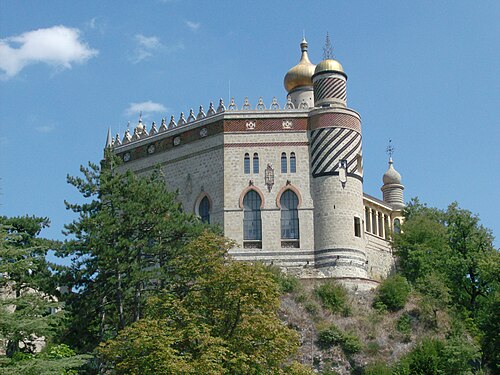
Cesare Mattei,
a Forerunner of Systems Medicine
From Electrohomeopathy to neuroscience, and the role of the sacred mountain of Montovolo
Abstract
From Electrohomeopathy to neuroscience, and the role of the sacred mountain of Montovolo
AbstractEssay by Francesca Ollin Vannini with the contribution of Graziano Baccolini's studies - Compiled and edited by Luigi Vannini with the support of Artificial Intelligence - July 2026
The essay follows the framework of the monograph by Francesca Vannini, Cesare Mattei. Un precursore della medicina sistemica (2026), and integrates into it the research of Graziano Baccolini, Alessandro Rapparini, Renzo Zagnoni, Marco Tamarri and Roberto Neri. Three lines of reading result, with deliberately distinct standing: a historical-systemic one (what model of the organism Mattei was proposing), a symbolic-initiatory one (the Rocchetta as a text) and an energetic-geographical one (the link with Montovolo). Where a claim is unproven — and several are — the text says so.
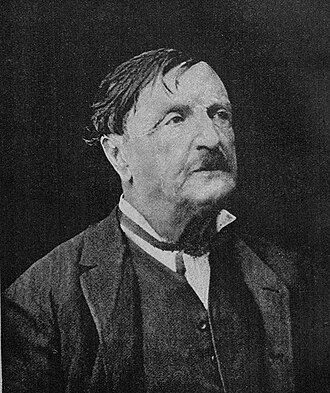
Cesare Mattei (Bologna, 1809–1896) — the son of a wealthy family enriched by trade, not of the Roman aristocracy as is often repeated — developed in the second half of the nineteenth century a therapeutic system called Electrohomeopathy: diluted herbal remedies, classified by electrical polarity and completed by mysterious coloured electric fluids (red, blue, white, yellow, green).
Distributed from 1881 through a network of more than a hundred depots across Europe, the Americas and Asia, the remedies won international fame: Fyodor Dostoevsky cited them in The Brothers Karamazov (1880), the journalist W.T. Stead described them in the Review of Reviews in 1891, and Lady Isabel Burton — wife of the explorer Richard Burton — visited the castle in 1883.
The central paradox of the Mattei phenomenon is chronological: on his death in 1896 the remedies — produced to exactly the same formulas — ceased to obtain extraordinary results. The American analyses of 1890 had already revealed that all five electric fluids were chemically identical: plain water with the same salt concentration. What, then, made them effective in the Count's hands?
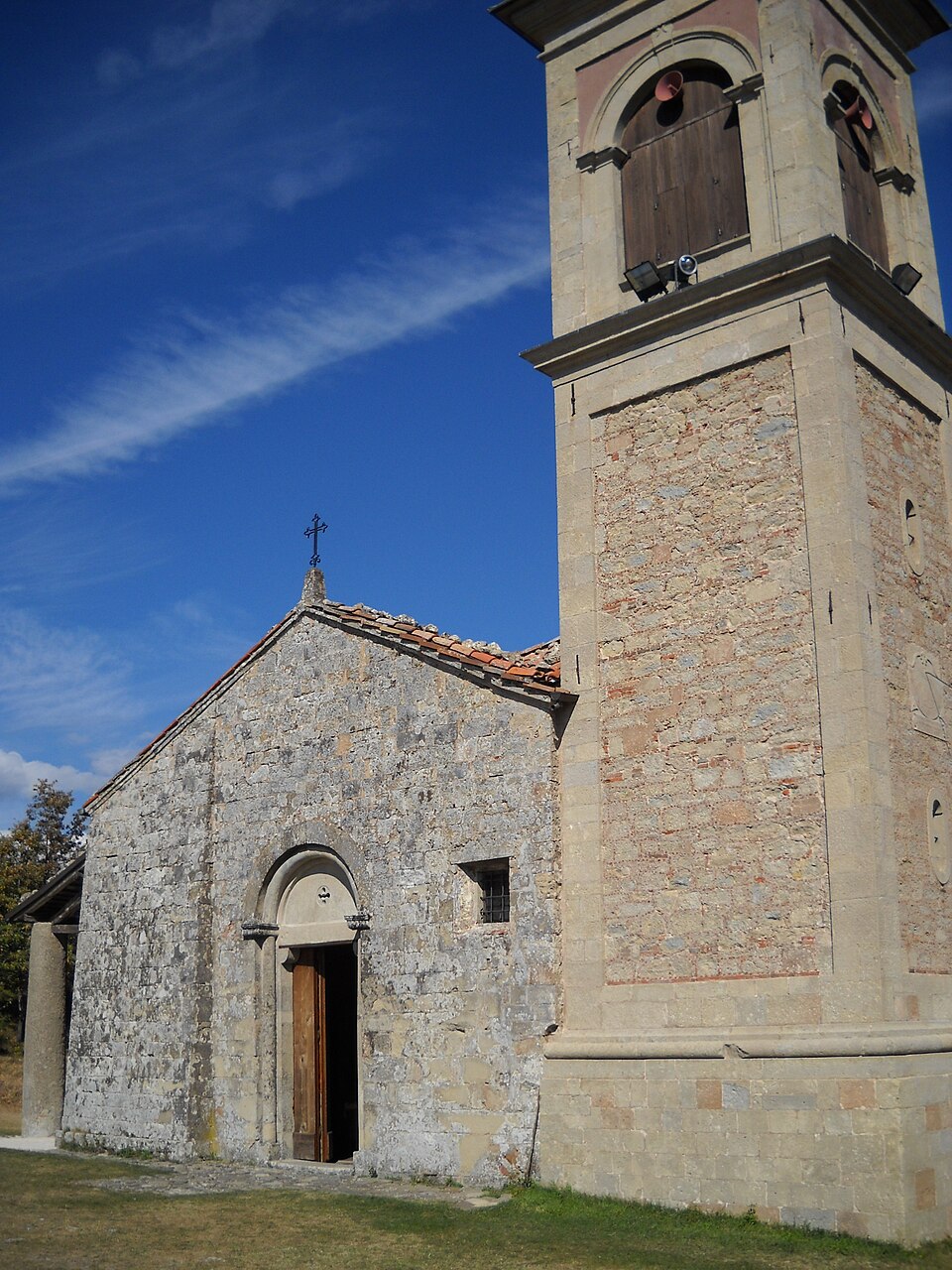
A few kilometres from the Rocchetta Mattei stands the Sanctuary of Montovolo (912 m), dedicated to the Black Madonna. According to the research of Professor Graziano Baccolini (University of Bologna, Department of Industrial Chemistry), the site was already an Etruscan oracular centre — dedicated first to the goddess Pales, then to Isis in the Roman period — and lies at the crossing of two synchronic lines (a terrestrial energetic grid, comparable to the ley lines of the Anglo-Saxon tradition).
One of these lines descends from Montovolo westwards, crosses the river Limentra and reaches — with geometric precision — the rocky spur on which the Rocchetta stands. This trajectory, mapped by a dowser at Baccolini's request, is for him the explanation of the Count's choice: a sensitive who had perceived the flow of energy and built his laboratory upon it.
The crucial element of the Rocchetta is the Tower of Vision: a laboratory without any window at all, with four metal antennas on the roof set at the cardinal points on metal pyramids — not lightning rods, since they neither occupy the highest point nor show earthing cables. Walls, floor and ceiling of organic materials (wood, pressed paper). A structure that corresponds exactly to an orgone accumulator (ORAC) in the terminology of Wilhelm Reich.
The theoretical chain reconstructed by Baccolini links Mattei to three predecessors: Franz Anton Mesmer (universal vital fluid), Karl von Reichenbach (the odic force, perceived as blue light in the dark by more than a hundred sensitives at his castle of Reisenberg) and Wilhelm Reich (orgone energy, studied systematically and suppressed by the American FDA in 1954). The energy flowing along the synchronic line from Montovolo was concentrated by the Tower, and when the room lit up with the faint orgone glow the Count immersed his remedies in it: not mystical hallucinations, but the sensory perception of a real energy, albeit one not yet classified by conventional science.
Baccolini's grandfather recalled that Mattei went regularly down to the Limentra — the river running along the synchronic line — to collect water with tiny pebbles in it. That water, "charged" by the energetic course of the line, was the basis of the electric fluids: spring water, not rainwater (the salt concentration confirmed by the analyses is the proof). The efficacy vanished with the Count because his successor was not a sensitive able to perceive the right moment.
Almost a hundred and thirty years after the Count's death, the Bolognese researcher Francesca Ollin Vannini — a marine biologist, trained for a decade with the Mexican curandero Don Jorge Dominguez — travels the same conceptual territory from a radically different angle, and for that very reason offers two keys to the Mattei case.
The first concerns why Mattei did what he did. In Biogenealogia. Le Radici dell'Anima (OM Edizioni, 2025) Ollin Vannini describes how an unprocessed primary wound turns into an existential mandate: the Count's mother, Teresa Montignani, died of breast cancer after fifteen years of agony, and out of that powerlessness was born the mission of a system to cure cancer itself. It is the archetype of Chiron, the Wounded Healer, who heals others because he has passed through a wound he could not heal in himself.
The second concerns how the remedies might have worked. EMH (Emotional Memory Healing) postulates that emotional experiences leave imprints in the cells and in gene expression — a mechanism that PNEI studies today as a dialogue between emotions, the nervous system and the immune system. The parallel with Baccolini is precise: where he describes the water of the Limentra "carrying within it the energy of Montovolo", she describes the cell carrying within it the memory of the original event. In both cases a material structure acts as the support of non-chemical information. And in the Manuale della Strega Moderna (2018) the practice of "energising water" proves structurally analogous to what the Count did in the Tower: the same logic on another scale. What emerges is an unbroken chain — Mesmer → Reichenbach → Mattei → Reich → Ollin Vannini — in which no one has ever been refuted: only ignored, derided or persecuted.
The monograph Cesare Mattei. Un precursore della medicina sistemica (2026) shifts the centre of gravity of the inquiry: rather than asking whether the remedies worked, it asks what model of the organism Mattei was proposing. Not the single organ, but the blood, the lymph, the nerves, vitality; not the suppression of the symptom, but the rebalancing of the terrain that produces it. In the nineteenth century of triumphant bacteriology this was a minority position; today systems biology, PNEI, epigenetics and bioelectricity describe the organism — in an incomparably more precise language — as a network of dynamic relations rather than as a sum of parts.
The comparison is made with declared methodological caution: none of the sources claims that contemporary science "confirms" Electrohomeopathy, and the book explicitly flags what remains undemonstrated — from the "memory of water" of Benveniste and Montagnier, never replicated, to the planetary grid of Becker–Hagens, which nonetheless places one of its nodes near the Rocchetta. What can be put into dialogue are not the explanations, but the questions. And Mattei's question, the volume suggests, was better than his answers.
On the level of data, the MP-AES analyses carried out in 2018 at the Department of Industrial Chemistry of the University of Bologna further revealed in the Sterpina spring an anomalous concentration of total phosphorus (~12 mg/L), alongside the already known phytoestrogens and an underground age estimated at more than fifty years.
The complete essay is organised into seven parts and thirty chapters: the life and work of the Count; the birth of Electrohomeopathy; the Rocchetta as symbolic architecture; Montovolo between sacred geography and geobiological hypotheses; the dialogue with contemporary science; the paths of knowledge between science, intuition and tradition; and finally the new paradigm of health. It examines the historical sources (Pietro Poppi's photographs of 1883, the American chemical analyses of 1890), the Etruscan symbols in the portal of Montovolo, Neri's electromagnetic measurements (2019), the MP-AES analyses of the Sterpina and the contemporary legacy of Electrohomeopathy.
Read the full essay →